Teaching Travel and Community Skills to Autistic Children

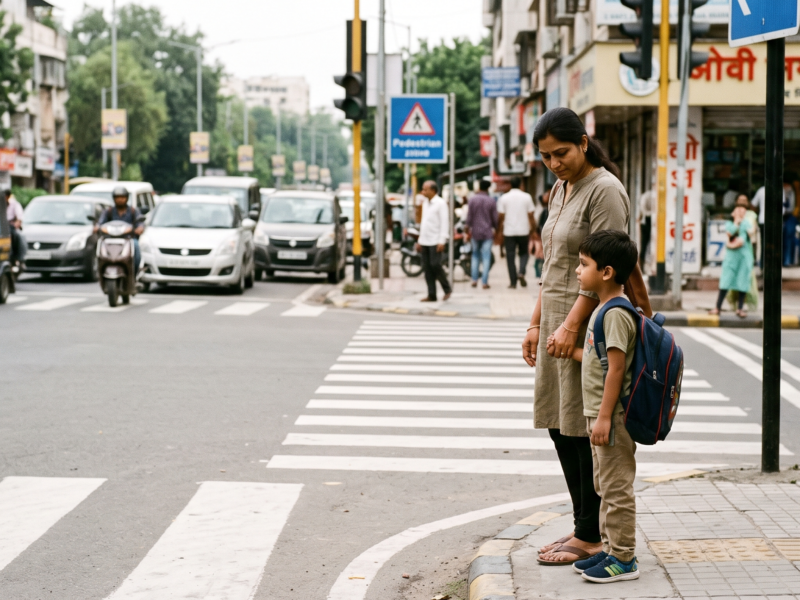
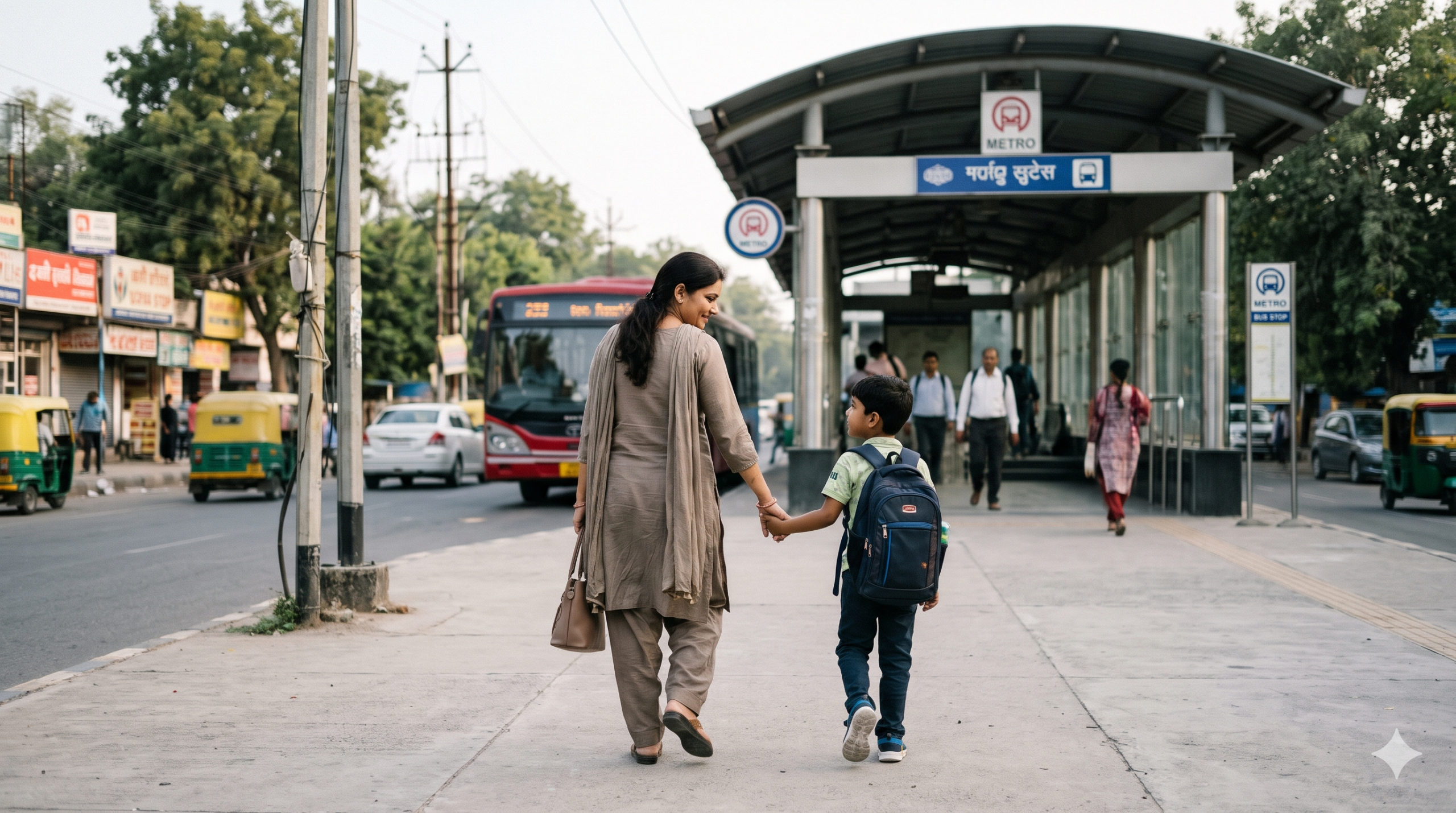
Parent teaching travel skills to an autistic child

Teaching Travel and Community Skills to Autistic Children

“Will my child ever be able to travel without me?”

This is a question many parents of autistic children think about as their child grows older.

Imagine your child recognising the route to school, visiting a familiar shop, finding the correct bus stop or telling someone when they need help.

These abilities may seem small, but they are important steps towards participating in everyday community life.

Some autistic children eventually learn to travel independently. Others continue to need supervision, a travel companion or additional support.

The goal is not necessarily to travel alone. It is to help each child participate in community activities as safely and confidently as possible.

Let’s explore how parents can begin teaching these skills.

1. Why Can Travelling Be Difficult for Some Autistic Children?

Travelling requires several skills working together.

A child may need to:

  • Recognise familiar places and landmarks.
  • Remember the route to a destination.
  • Follow road-safety rules.
  • Understand where to wait or which vehicle to board.
  • Communicate with unfamiliar people.
  • Manage crowds, noise and changes in routine.
  • Respond safely when something unexpected happens.

Some children understand routes well but struggle with traffic awareness. Others may communicate confidently at home but find busy public places overwhelming.

These differences are important because travel training should begin with the child’s individual strengths and support needs.

Before introducing public transport, help your child become familiar with places in their everyday environment.

Begin with locations they visit regularly:

  • Home
  • School
  • Therapy centre
  • Nearby grocery shop
  • Park
  • A familiar relative’s home

Activity: Recognise the Place

Take photographs of these locations.

Show your child two photographs and ask:

“Where is your school?”

Or:

“Which one is the park?”

If your child uses AAC, gestures or pictures, allow them to respond using their preferred communication method.

Next, practise recognising these places during supervised outings.

For example:

When approaching the school, say:

“Look, this is your school.”

Gradually, your child may begin identifying familiar places without reminders.

Parent Tip: Recognising places is a useful foundation, but it does not mean a child can navigate to them safely without supervision.
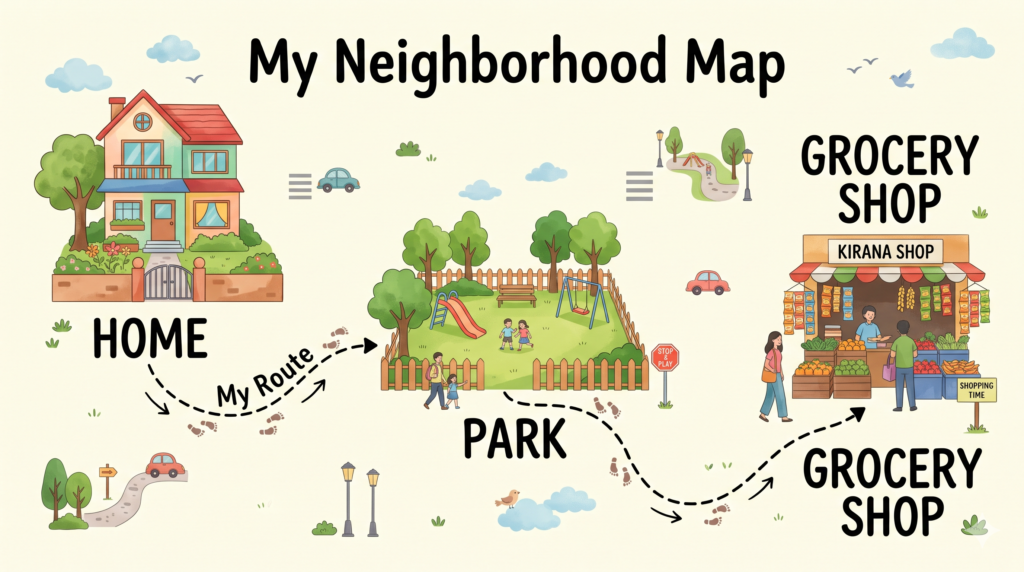
	Visual route map for teaching community navigation to autistic children

Once your child recognises familiar locations, introduce the idea of travelling from one place to another.

Choose a short, familiar journey.

For example:

Home → Grocery Shop → Home

Activity: Make a Picture Route

Create a simple visual sequence:

  1. Leave home with a parent.
  2. Walk along the familiar footpath.
  3. Reach the grocery shop.
  4. Buy an item.
  5. Return home with the parent.

Use photographs of actual landmarks whenever possible.

Practise the same route regularly.

Later, ask your child to identify the next landmark or point towards the destination.

For children who can read, written directions or a simple map may also be useful.

Important: Knowing the route is different from being ready to travel alone. Parents must continue providing supervision appropriate to the child’s road-safety awareness and abilities.

Buses, metro trains and other public transport systems can offer important opportunities for community participation.

However, they may also involve loud noises, crowds, waiting and unexpected changes.

Start by helping your child become familiar with the experience.

Step 1: Introduce the Vehicle

Show pictures or videos of:

  • City buses
  • Metro trains
  • Auto-rickshaws
  • Trains
  • Other familiar transport options

Explain where people board, sit and get off.

Step 2: Visit the Location

Take your child to a bus stop or metro station during a relatively quiet period.

Initially, you might simply observe vehicles arriving and departing.

The child does not need to board immediately.

Step 3: Take a Short Journey Together

When your child is comfortable, plan a short journey with a familiar adult.

Practise:

  1. Reaching the correct stop or station.
  2. Waiting in a designated safe area.
  3. Identifying the correct vehicle with adult assistance.
  4. Boarding safely when permitted.
  5. Sitting or standing safely during the journey.
  6. Getting off at the planned destination with the adult.

Use a picture schedule if helpful.

Gradually increase participation according to your child’s comfort, safety skills and abilities.

Safety Reminder: Children should not practise boarding, leaving vehicles or navigating stations without appropriate adult supervision. Keep a safe distance from moving traffic and platform edges.
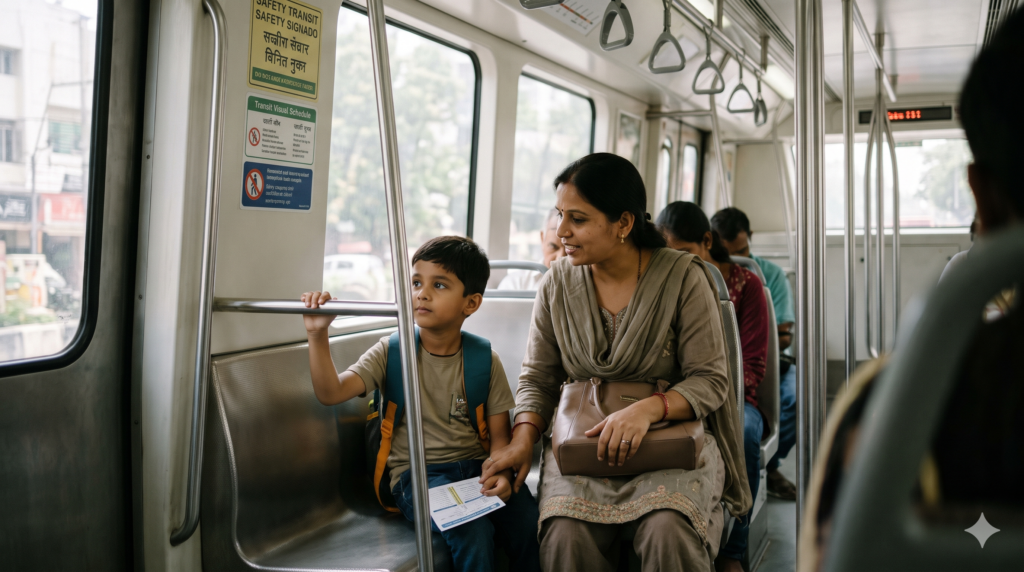
Teaching public transport skills to an autistic child

For some autistic children, sensory experiences are among the biggest challenges of community travel.

A crowded bus may involve:

  • Loud horns and engine sounds.
  • People talking.
  • Unexpected physical contact.
  • Bright lights.
  • Long waiting periods.
  • Sudden movement.

These experiences may become overwhelming.

Sensory-Friendly Travel Strategies

Consider:

  • Travelling during quieter periods.
  • Explaining the journey beforehand.
  • Using a visual timetable.
  • Choosing a less crowded area when possible.
  • Carrying familiar comfort items.
  • Offering suitable noise-reducing headphones when helpful and safe.
  • Planning opportunities for breaks.

Headphones should not prevent a child from noticing essential warnings or instructions.

Teach your child a functional way to communicate:

“Too noisy.”

“I need a break.”

“I want to go home.”

Children using AAC or picture cards can learn these messages as well.

The aim is not to force children to tolerate overwhelming situations. It is to make community participation more comfortable and accessible.

Travel does not always happen as expected.

A bus may arrive late. A familiar road may be closed. A shop may be shut.

Some autistic children find these changes particularly difficult.

Practise small, manageable changes in safe situations.

For example:

Original plan: Go to the park.

New plan: The park is closed, so visit the nearby library with the parent.

Use a visual card labelled CHANGE OF PLAN to explain the difference.

Teach simple responses:

  • Stop and stay with the supervising adult.
  • Ask for help.
  • Check the updated plan.
  • Contact a trusted caregiver when appropriate.

For older children who use phones, practise calling a parent and communicating their current location.

Never assume that a child who successfully completes a familiar route will automatically manage an unfamiliar route or emergency.

Asking for help is one of the most important community skills.

Teach your child to identify appropriate helpers, such as:

  • A police officer.
  • A uniformed transport employee.
  • A staffed information counter.
  • A security guard.

Practise short messages.

“I need help.”

“I cannot find my parent.”

“Please call my mother.”

For a child who does not communicate verbally, prepare an AAC message or emergency information card.

The card can include a caregiver’s contact number and essential communication information.

Explain that the child should remain in a safe, visible public place while seeking help and should not leave with an unfamiliar person.

For children who may unexpectedly move away from caregivers, an individual wandering-prevention and emergency-response plan is particularly important.


Communication supports for autistic children during community travel

You do not need to begin with complicated travel activities.

Use familiar family outings as learning opportunities.

Community Activity

Skill to Practise

Walking to a nearby shop

Recognising landmarks

Visiting a park

Following a familiar route

Going to a supermarket

Finding items on a shopping list

Visiting a relative

Recognising a destination

Travelling in an auto-rickshaw

Remaining safely seated

Visiting a metro station

Following signs and waiting safely

Going to a restaurant

Communicating needs

Visiting a library

Following community rules

Choose activities your child enjoys.

Start with one small goal.

For example:

This week’s goal: My child will recognise the entrance to our regular grocery shop during a supervised outing.

As the child progresses, introduce additional skills.

Occupational therapy can help children develop functional skills needed for community participation.

Depending on the child’s needs, an occupational therapist may support:

  • Understanding and following travel routines.
  • Using visual schedules and maps.
  • Developing body awareness and movement planning.
  • Managing sensory challenges.
  • Organising belongings for outings.
  • Practising functional communication with other professionals.
  • Learning community routines through structured activities.

For example, a therapy goal might be:

Goal: The child will follow a four-step visual routine during a supervised visit to a familiar shop, using appropriate prompts and caregiver support.

The therapist can collaborate with parents to help the child practise these skills outside the therapy centre.

Travel-training specialists, educators and other professionals may also be involved.

Independent travel readiness should never be determined by one therapy activity or a child’s age alone.

Look for progress in everyday participation.

Your child might begin to:

  • Recognise familiar landmarks.
  • Follow a picture route.
  • Identify the correct destination.
  • Wait appropriately with a caregiver.
  • Communicate when overwhelmed.
  • Ask a designated adult for help.
  • Manage a familiar outing with fewer prompts.

These are meaningful achievements.

However, needing fewer prompts does not necessarily mean needing less supervision.

The decision to allow independent travel requires careful consideration of road safety, communication, judgement, unexpected situations and the child’s ability to respond to emergencies.

Frequently Asked Questions?

1. At what age should I start teaching travel skills to my autistic child?

Simple skills such as recognising familiar places and following community routines can be introduced when the child is ready.

There is no fixed age for starting travel training or achieving independent travel.

Not necessarily.

A strong memory for routes is valuable, but safe travel also requires traffic awareness, decision-making, communication and the ability to manage unexpected situations.

Start with shorter, quieter and more predictable experiences. Use visual preparation, communication supports and appropriate sensory accommodations.

If travel causes significant distress, an occupational therapist or another suitable professional may help identify and address contributing factors.

Yes. Some non-speaking children can learn routes, recognise places and communicate using pictures, gestures or AAC.

The level of supervision and support should be based on the child’s overall safety skills rather than speech alone.

Occupational therapy can support the functional skills involved in community mobility.

However, independent travel depends on several factors, including safety, communication, judgement, environmental accessibility and individual needs.

Some children may become independent travellers; others may continue to travel with appropriate assistance.

Final Thoughts: Community Participation Is More Important Than Travelling Alone

For parents, the idea of their child travelling independently may represent an important hope for the future.

But independence develops differently for every child.

For one autistic child, progress may mean recognising the way to school.

For another, it may mean comfortably travelling on a bus with a caregiver.

For an older child, it may mean following a familiar route using a map and appropriate safety supports.

The goal is to help each child participate in everyday community life with confidence, dignity and the level of assistance they need.

At Sunshine Kids, we believe that practising meaningful life skills with families is an important part of supporting children’s long-term development.