Safety Skills for Autistic Children: Road Safety, Getting Lost and Asking for Help
One of the biggest worries parents have is: “Will my child know how to stay safe when I am not around?”
You may wonder whether your child will stop before crossing a road, stay with you in a crowded shopping centre, or ask someone for help if they get lost.
These concerns are especially important for parents of autistic children who have difficulty recognising danger, communicating in unfamiliar situations, or managing unexpected changes.
The good news is that many safety skills can be taught gradually through visual supports, simple instructions and repeated practice.
However, learning a safety rule does not automatically mean a child can use it reliably in a dangerous situation. Appropriate adult supervision must continue until the child can consistently demonstrate the necessary skills.
Let’s explore how parents can begin teaching everyday safety skills.
1. Why Can Safety Awareness Be Difficult for Some Autistic Children?
Every autistic child is different. Some develop strong safety awareness, while others need additional support.
Difficulties may arise because a child:
- Becomes distracted by something interesting.
- Has difficulty judging the speed or distance of moving vehicles.
- Becomes overwhelmed by traffic noise or crowded places.
- Finds unexpected situations confusing or frightening.
- Has difficulty following instructions such as “Stop!” or “Wait!”
- Cannot easily explain where they live or whom to contact.
Some children may also leave a safe area unexpectedly. This is often called wandering or elopement.
Understanding why a child moves away is important. They may be trying to reach a favourite place, explore something interesting, or escape an overwhelming situation.
The aim is not simply to prevent a behaviour. It is to understand the child’s needs, improve communication, teach relevant skills and create safer surroundings.
2. How Can I Teach My Autistic Child Road Safety?
Road safety is one of the most important community skills.
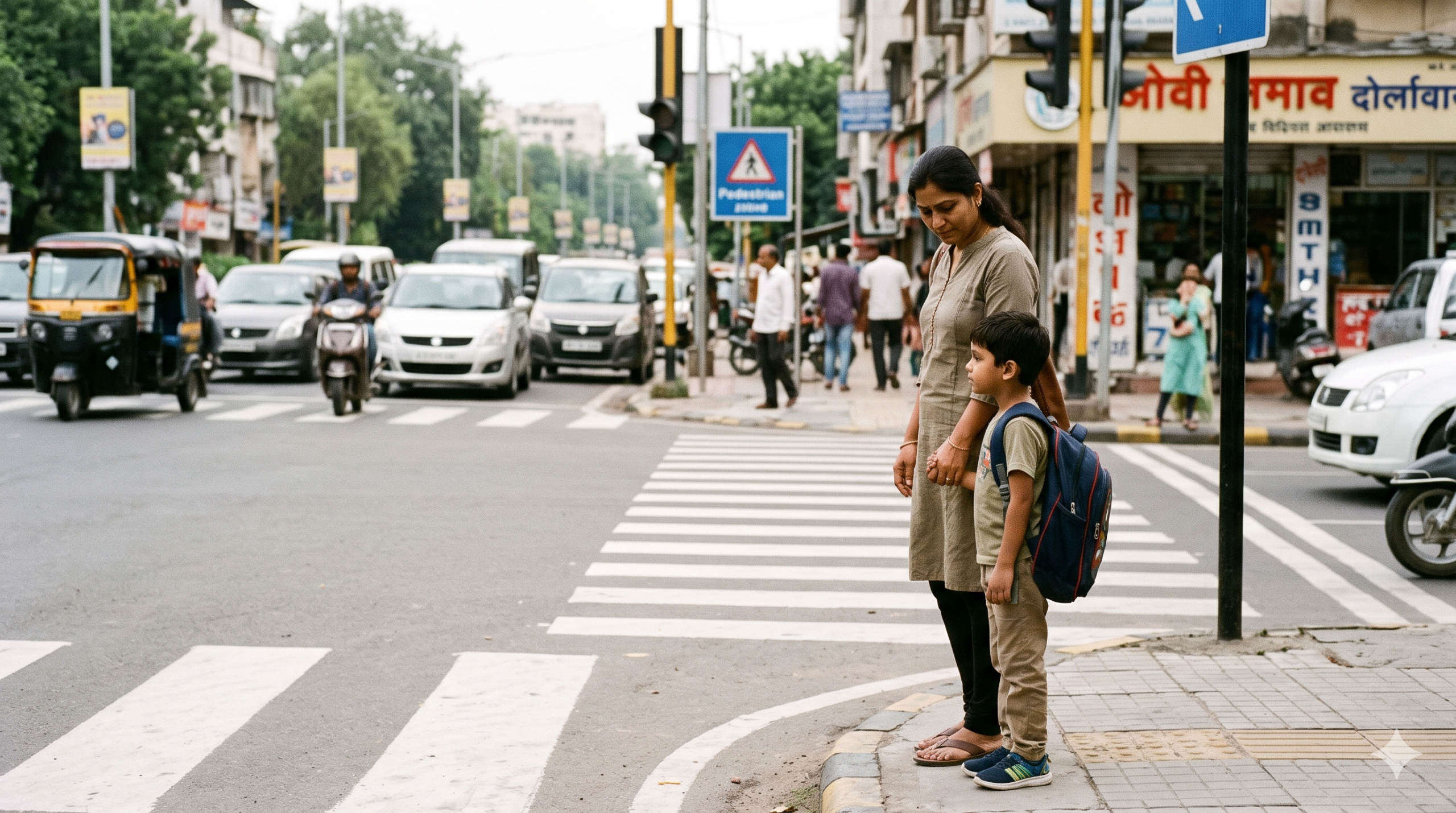
A useful starting point is teaching your child to stop at the edge of the road and wait for an adult.
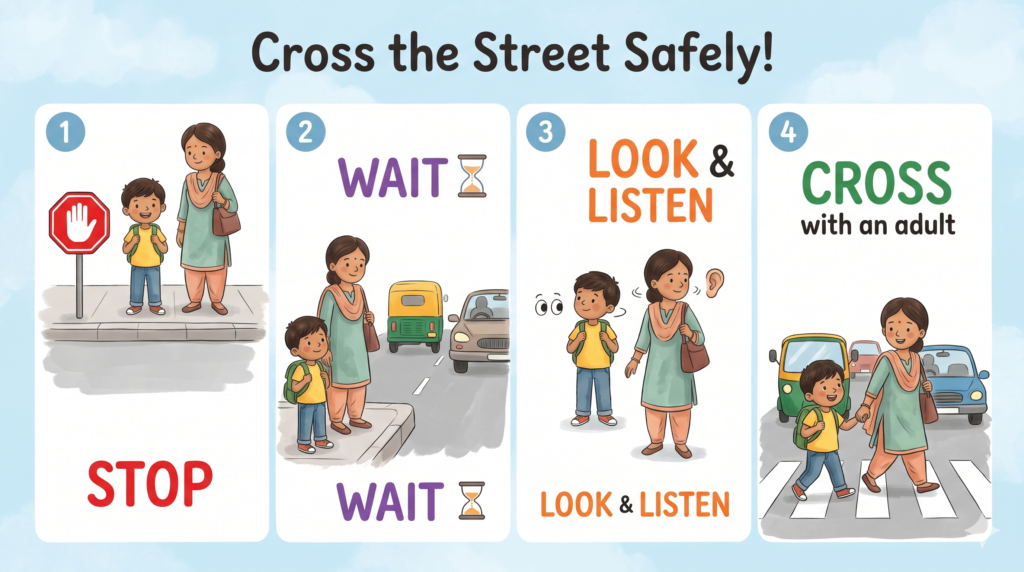
Step 1: Teach “Stop” and “Wait”
Begin practising in a safe environment away from traffic.
For example:
- Walk together in your home or garden.
- Say “Stop” and demonstrate stopping.
- Use a red STOP picture if helpful.
- Practise waiting beside you.
- Gradually practise in other safe locations.
Keep instructions short and consistent.
Some children understand pictures, gestures or demonstrations more easily than verbal instructions.
Step 2: Introduce Basic Road Rules
Teach simple rules:
- Stop before reaching the road.
- Stay beside the adult.
- Look for vehicles in both directions.
- Cross only when the supervising adult confirms it is safe.
- Use a designated pedestrian crossing whenever available.
- Keep watching for traffic while crossing.
Explain that a zebra crossing or green pedestrian signal does not guarantee every vehicle will stop.
For younger children and those who cannot yet demonstrate reliable safety awareness, adults should remain responsible for deciding when and where to cross.
Step 3: Practise in Real Situations
Start with a quiet, familiar route.
Gradually introduce:
- Walking along a footpath.
- Stopping at a driveway.
- Waiting at a pedestrian crossing.
- Recognising cars, motorcycles, bicycles and buses.
- Understanding that a parked vehicle may suddenly move.
Important: Never practise by allowing a child to approach or cross a busy road independently to test their skills.
Children need repeated, supervised real-world practice. Being able to describe road rules or identify traffic lights in pictures is not enough to establish independent road-crossing safety.
3. What If My Autistic Child Runs Away or Wanders?
Some autistic children may suddenly move away from a parent or caregiver.
This can happen at home, school, in a shopping centre or during a family outing.
If your child has a history of wandering, prevention and emergency planning are essential.
Practical Safety Precautions
- Maintain appropriate supervision, especially near roads and water.
- Use suitable, safely installed door locks or alerts that comply with fire-exit requirements.
- Inform teachers and caregivers about known wandering risks.
- Identify situations that might trigger your child to leave.
- Prepare your child before visiting unfamiliar places.
- Establish a clear plan for who is supervising your child during outings.
- Consider an identification card or bracelet containing caregiver contact information.
An identification device or GPS tracker may provide additional support, but neither replaces supervision.
Water safety is particularly important. If your child may wander, assess nearby pools, ponds, canals and other water hazards. Swimming lessons are valuable but do not replace barriers and close supervision.
4. How Can I Teach My Child What to Do If They Get Lost?
Parents can teach a simple plan for becoming separated in a public place.
A useful example is:
The Three-Step Help Plan
Step 1: Stop
If the child realises the parent is missing, practise stopping in a safe place rather than running around searching.
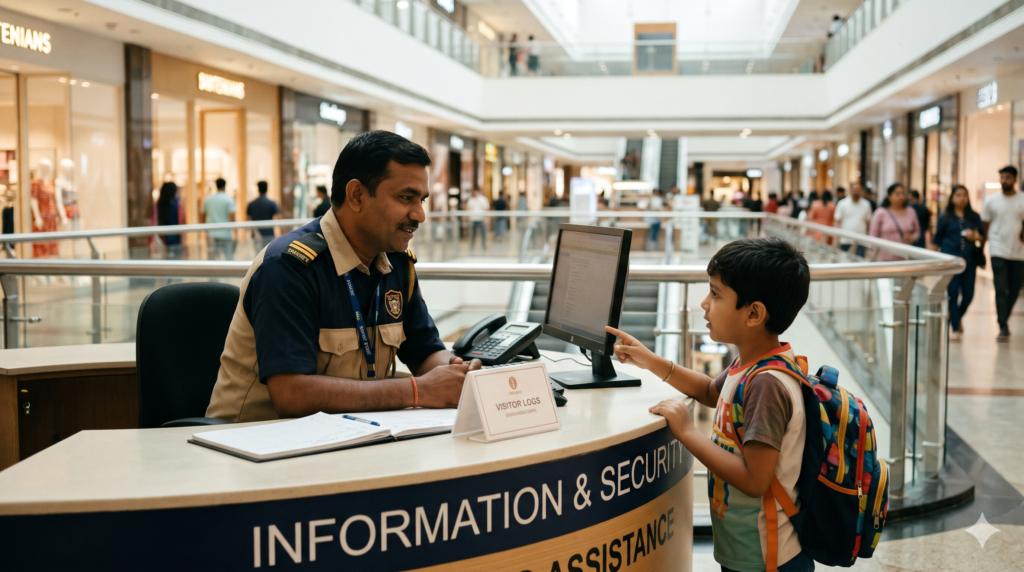
Step 2: Find a Safe Person
Teach the child to identify designated helpers, such as:
- A police officer.
- A security guard.
- A shop employee at a staffed counter.
- Another trusted adult identified in advance.
Explain that the child should remain in a visible public area when seeking help and should not leave with an unfamiliar person.
Step 3: Ask for Help
Teach whichever communication method the child can use.
For a speaking child:
“Help. I cannot find my mother.”
For a child using pictures or AAC:
Show a card or select a message saying:
“I am lost. Please call my parent.”
Practise the sequence through role-play at home before introducing it during closely supervised community visits.
A Simple Emergency Information Card
For children who cannot reliably remember contact details, consider a small card containing:
I need help.
Please contact my parent/caregiver.
Contact number: __________
Important communication information: __________
Parents should decide what information is appropriate to share, keeping the child’s privacy and safety in mind.

5. Teaching Children to Ask for Help
Asking for help is an essential independence skill.
Some autistic children may communicate their everyday needs successfully but struggle when frightened, confused or overwhelmed.
Start by teaching the child to request help during ordinary activities.
For example:
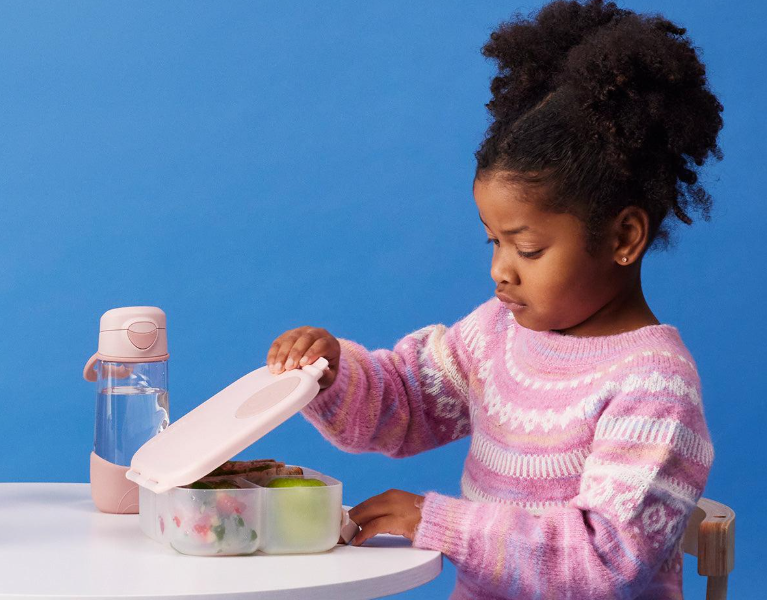
- A lunchbox is difficult to open.
- A shoelace becomes untied.
- A favourite item is missing.
- The child cannot find the correct classroom.
- A task feels too difficult.
Teach a simple response:
“I need help.”
If your child does not speak, use a gesture, picture card, communication board or AAC device.
Then gradually practise asking familiar adults, teachers and designated helpers.
Remember: A child does not need to speak verbally to learn functional help-seeking skills.
6. How Can Parents Teach Safety Skills at Home?
Safety learning does not need to begin on busy roads or in crowded places.
You can practise many skills at home.
Safety Skill | Simple Home Practice |
Stop and wait | Play a stop-and-go game |
Recognise traffic | Use toy cars and road pictures |
Stay with an adult | Practise walking together in a safe area |
Ask for help | Create small, manageable situations where the child needs assistance |
Identify safe helpers | Use pictures and role-play |
Remember contact details | Practise giving or showing a caregiver’s phone number |
Manage unexpected situations | Use short visual stories |
Choose one or two goals at a time.
Practise regularly, praise meaningful progress and avoid making safety lessons frightening.
A child who becomes anxious around traffic may benefit from quieter practice environments, visual preparation and gradual exposure at a comfortable pace.
7. How Can Occupational Therapy Help Develop Safety Skills?
Occupational therapy can support the everyday skills that contribute to safer community participation.
Depending on the child’s needs, an occupational therapist may work on:
- Attention and awareness during daily activities.
- Following functional instructions.
- Motor planning and body awareness.
- Managing sensory challenges in public environments.
- Practising routines such as stopping and waiting.
- Using visual schedules for community outings.
- Participating in real-life activities with appropriate support.
A therapist may also collaborate with parents, teachers and other professionals to develop practical goals.
For example:
Goal: The child will stop and wait beside a caregiver at a designated practice point during supervised community walks.
Teaching strategy: Practise in a safe environment using consistent instructions, visual cues and gradual reduction of unnecessary prompts.
Progress measurement: Record whether the child responds consistently across different settings while maintaining adult supervision.
Importantly, safety planning may require contributions from multiple professionals. Occupational therapy is one part of the child’s broader support system.
8. How Do I Know My Child Is Making Progress?
Instead of asking only whether your child understands safety rules, observe how they use those skills.
You may notice progress when your child:
- Stops more consistently when prompted.
- Waits beside you at a crossing.
- Stays with the designated adult during an outing.
- Uses a picture or words to request help.
- Shows an emergency information card when practising.
- Follows a familiar community routine with less prompting.
Progress should be assessed across different environments, not only during therapy sessions.
Reducing prompts does not necessarily mean reducing supervision. A child may perform a skill independently during a structured practice activity but still require close adult support in an unpredictable public setting.
Frequently Asked Questions?
1. At what age should autistic children learn road safety?
Basic safety skills can be introduced early through simple routines and games. The type of instruction should match the child’s understanding, communication and developmental abilities.
Age alone does not determine whether a child can cross a road independently.
2. My child knows traffic-light colours. Can I allow independent road crossing?
Not necessarily. Identifying traffic signals is different from recognising moving traffic, checking for turning vehicles and making safe decisions.
Independent road crossing requires consistent real-world safety skills, not just knowledge of rules.
3. What should I do if my autistic child frequently runs away?
Identify possible triggers, maintain appropriate supervision and create an individual safety plan with your child’s healthcare and support team.
Take particular precautions near roads, water and other hazards.
4. How can a non-speaking autistic child ask for help?
A child can use gestures, picture cards, AAC, a communication device or an identification card.
The goal is effective communication, not necessarily spoken language
5. What if my child goes missing?
Act immediately. Alert nearby staff and security, notify police or emergency services, and provide a recent photograph, description, communication needs and locations the child may seek out. Tell responders immediately about any nearby water hazards.
In India, dial 112 for emergency assistance. Child Helpline 1098 is also available for child-protection assistance. Families in other countries should use their local emergency numbers.
Do not assume that a child who has learned safety rules will necessarily be able to follow them when frightened or disoriented.
Final Thoughts: Safety Is an Important Part of Independence
Every parent wants their child to become more confident and independent.
For an autistic child, independence may begin with small but meaningful achievements: stopping before a road, staying close during an outing, recognising a familiar helper or communicating “I need help.”
These skills take time, consistency and practice.
The goal is not to push a child toward independence before they are ready. It is to build confidence, communication and safety while providing the support they need.
At Sunshine Kids, we believe that everyday functional skills deserve the same attention as academic and communication development.
Helping children participate safely in daily life is an important part of preparing them for the future.
Research References and Reliable Sources
I verified the guidance against established autism and child-safety resources.
1. Centers for Disease Control and Prevention (CDC)
The CDC explains wandering risks, prevention strategies, identification, emergency planning and safety-skills teaching.
The CDC also reports that, in one parent survey, approximately half of autistic children and youth were reported to have wandered. This is a population-level finding, not a prediction for an individual child. CDC
2. American Academy of Pediatrics (AAP)
The AAP provides guidance on reducing wandering risks, preparing for outings, identification, family supervision plans and water safety.
Keep Kids with Autism Safe from Wandering — AAP
3. National Autistic Society
Its road-safety guide discusses sensory difficulties, clear instructions, visual information and practising safety through games or social stories.
Road Safety: A Guide for Parents and Carers
4. American Academy of Pediatrics — Pedestrian Safety
The AAP recommends supervised practice and explains that most children are not ready to cross streets alone until at least age 10. Some children with disabilities need additional time or support, so readiness must be individually assessed. HealthyChildren.org
Pedestrian Safety Tips for Families
5. Indian Road Safety Guidance
Indian government road-safety guidance reinforces using pedestrian crossings, supervising children and checking traffic before crossing.
Road Safety Tips for Pedestrians — Jharkhand Police
For emergency information:
Government of India Emergency Response System — 112
Ministry of Women and Child Development — Child Helpline 1098