Eating Independently: Mealtime and Feeding Skills in Autistic Children
Mealtimes are an important part of everyday life. Parents often want their child to eat independently, use a spoon, drink from a cup, sit comfortably at the table and gradually become comfortable with a wider variety of foods.
However, eating can involve several different skills. Some autistic children can feed themselves but accept only a small number of foods. Others may be willing to eat different foods but struggle with chewing, using utensils or managing the steps involved in a meal.
The goal is to help children develop safe, comfortable and practical eating skills at their own pace.
1. Why can eating be difficult for autistic children?
Eating is a complex activity involving sensory processing, coordination, oral-motor skills and communication.
Some common challenges include:
Texture sensitivity: A child may prefer smooth foods and avoid foods that are crunchy, sticky, mixed or lumpy.
Smell and taste: Strong smells or unfamiliar flavours may make certain foods difficult to tolerate.
Food appearance: A child may prefer foods of a particular colour, shape, brand or presentation.
Routine and predictability: They may want the same food, plate, spoon or mealtime arrangement every day.
Motor coordination: Holding a spoon, scooping food, using a fork or drinking without spilling can require practice.
Oral-motor difficulties: Chewing, moving food around the mouth or swallowing may be challenging for some children.
Communication difficulties: A child may find it difficult to communicate hunger, fullness, discomfort or food preferences.
These difficulties are not simply bad habits or stubbornness. Understanding the reason behind them is the first step towards helping.
2. Start with basic self-feeding skills
Before expecting a child to eat a complete meal independently, teach the smaller skills involved.
You can practise:
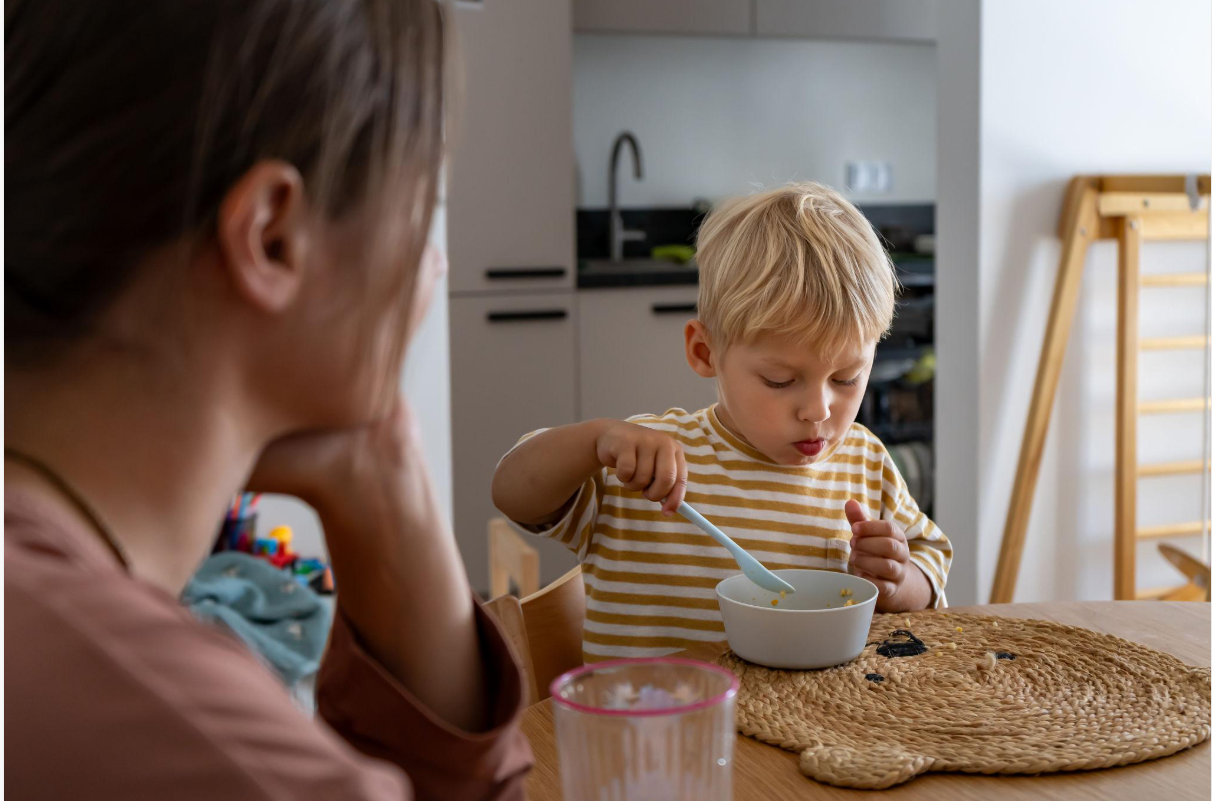
Using a spoon
Hold the spoon.
Scoop a small amount of food.
Bring it towards the mouth.
Take the food from the spoon.
Put the spoon back in the bowl.
Using a fork
Start with soft foods that are easy to pick up. Practise holding the fork, picking up a small piece and bringing it to the mouth.
Drinking from a cup
Begin with a suitable, stable cup and a small amount of liquid. Allow the child to practise holding and lifting it with support if needed.
Opening food containers
Practise opening easy-to-use lunch boxes, snack containers and packets. Choose packaging that is appropriate for the child’s hand strength and coordination.
Remember, some children may need adapted spoons, non-slip mats, easy-grip handles or cups with suitable designs. These adaptations are tools for independence, not signs of failure.
3. Help your child become comfortable at mealtimes
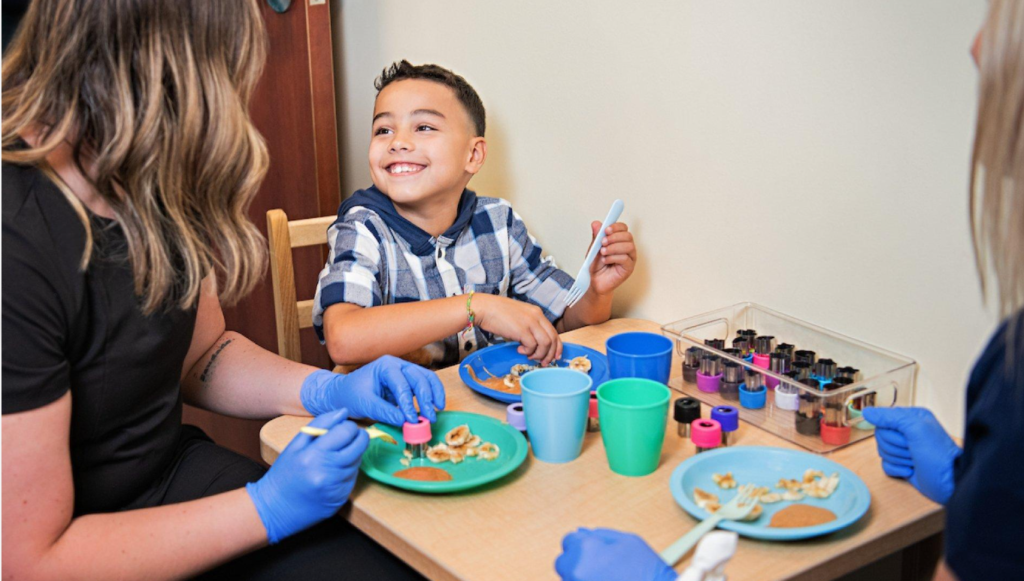
A predictable mealtime routine can make eating easier.
Try these simple strategies:
Keep meals and snacks at reasonably predictable times.
Use a familiar, comfortable eating place.
Reduce unnecessary noise and distractions if they affect your child.
Offer an appropriate chair and foot support so the child can sit comfortably.
Use familiar plates and utensils when these help your child feel comfortable.
Give enough time to eat without rushing.
Some children may need movement breaks or a different seating arrangement. The aim is to support safe and comfortable participation, not to insist that every child sits in exactly the same way.
4. What if your child eats only a few foods?
Food selectivity is common among autistic children. A child may accept only a few familiar foods and refuse unfamiliar foods because of their smell, taste, texture, appearance or unpredictability.
For example, a child may eat plain rice but refuse rice mixed with vegetables. Another child may accept a particular brand of biscuit but reject a similar biscuit from another brand.
Try the following:
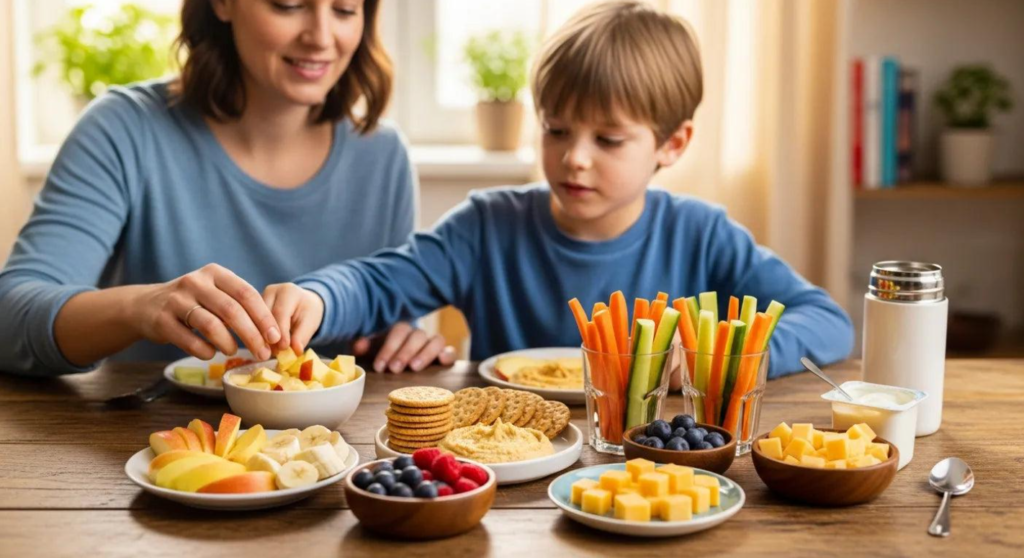
Keep familiar foods available. Do not suddenly remove all preferred foods in an attempt to make your child eat something new.
Introduce small changes gradually. If your child likes plain dosa, you might first offer a small piece of a slightly different dosa alongside the familiar one.
Allow exploration without pressure. Looking at, smelling or touching a new food can be an early step. Eating it immediately should not be the expectation.
Offer choices. Give two suitable options rather than asking an overwhelming open-ended question.
Respect food preferences and cultural practices. Work with foods that are familiar to your family and appropriate for your child’s nutritional needs.
Progress may begin with tolerating a new food on the plate. It does not have to begin with eating it.
5. Teach practical mealtime independence
Eating independently involves more than using a spoon.
You can gradually teach your child to:
Wash hands before meals.
Recognise their plate, spoon and cup.
Carry suitable items to the table.
Open a lunch box or easy-to-open container.
Eat using appropriate utensils.
Communicate when they want more food or are finished.
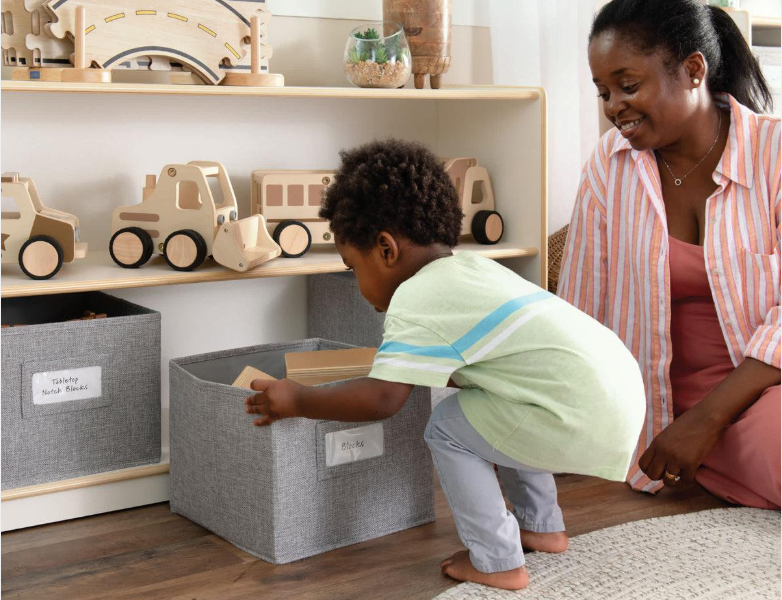
Put used utensils in a designated place.
Help clean the eating area.
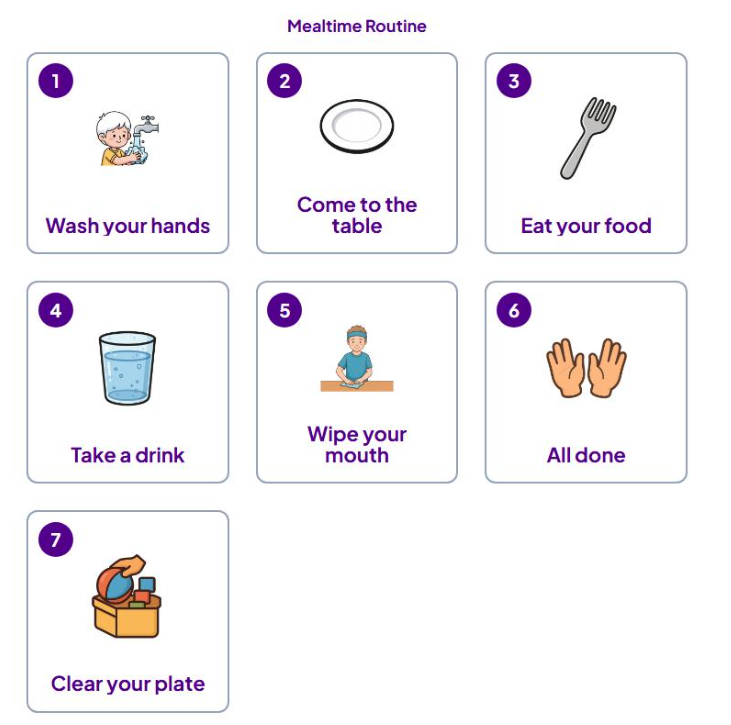
Use pictures, demonstrations or short instructions if your child finds verbal directions difficult.
A simple visual routine could be:
Wash hands.
Take your plate.
Sit comfortably.
Eat your meal.
Drink water.
Put your plate away.
Wash hands.
Teach the steps gradually rather than expecting the child to complete the whole sequence immediately.
6. Avoid pressure and mealtime battles
When a child refuses food, parents understandably become worried. However, repeated pressure, force-feeding, threats or punishment can make mealtimes more stressful.
Instead:
Stay calm when your child refuses something.
Avoid forcing food into the mouth.
Do not use hunger or removal of all preferred foods as a way to force acceptance.
Offer familiar foods while working on new foods gradually.
Notice and appreciate small steps, such as touching or smelling an unfamiliar food.
Respect signs that your child is full or uncomfortable.
The priority is a safe and supportive relationship with food.
7. When should parents seek professional help?
Food selectivity can sometimes affect nutrition, growth and health. It is important to seek professional advice if your child:
Eats a very small range of foods or is gradually accepting fewer foods.
Avoids entire food groups.
Is losing weight or not growing as expected.
Has persistent constipation, vomiting or abdominal discomfort.
Frequently coughs, chokes or gags while eating.
Holds food in the mouth for long periods.
Has difficulty chewing or swallowing.
Eats non-food items such as paper, soil or other objects.
Coughing or choking during meals, recurrent chest infections, painful swallowing or suspected swallowing difficulty need prompt medical and feeding/swallowing assessment. If a child is choking and cannot breathe, cough or speak, seek emergency help immediately.
A paediatrician can assess medical concerns and growth. Depending on the child’s needs, the team may include a registered dietitian, speech-language pathologist with feeding and swallowing expertise, occupational therapist, gastroenterologist or other relevant specialist.
Do not start restrictive diets or nutritional supplements without appropriate professional advice.
8. How can occupational therapy help?
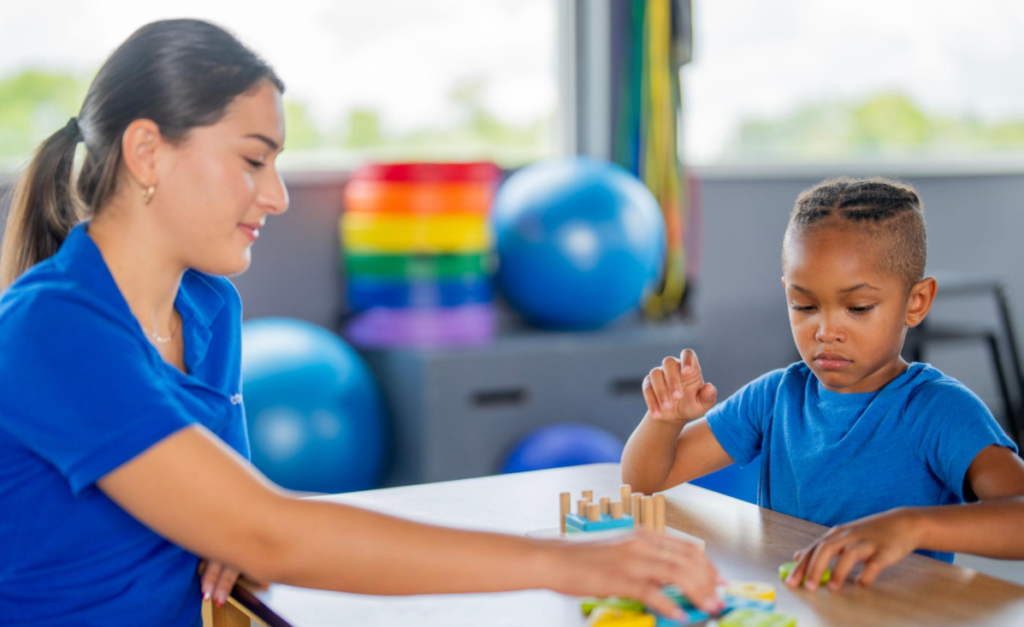
Occupational therapy may support the functional skills needed for mealtime participation.
Depending on the child’s individual needs, an occupational therapist may work on:
Holding and using spoons and forks.
Hand coordination and grasp.
Sitting position and access to suitable utensils.
Opening lunch boxes and containers.
Following mealtime routines.
Managing sensory aspects of the eating environment.
Practising everyday food-related tasks.
When there are concerns about chewing or swallowing safety, assessment by an appropriately trained feeding and swallowing professional is essential. Occupational therapy should not replace medical or swallowing assessment.
At Sunshine Kids, mealtime participation and self-feeding can be considered as part of a child’s individual daily living goals when appropriate. Parents can also learn how to practise relevant skills at home.
9. How can parents measure progress?
Look for small improvements rather than judging progress only by how much food your child eats.
| Area | Progress to notice |
|---|---|
| Self-feeding | Holds a spoon and brings food to the mouth |
| Drinking | Holds and drinks from a suitable cup |
| Coordination | Scoops food with less assistance |
| Mealtime routine | Participates in more steps |
| Communication | Indicates hunger, fullness or food preferences |
| Food exploration | Tolerates an unfamiliar food nearby or explores it |
| Practical skills | Opens a lunch box or puts utensils away |
A child may become more independent with a spoon while still needing support with food variety. Both areas can be worked on separately.
Frequently Asked Questions?
1. Why does my autistic child eat only a few foods?
Sensory sensitivities, predictability, anxiety, medical discomfort and oral-motor difficulties can all contribute. A professional assessment can help identify the reasons.
2. Should I force my child to taste new foods?
No. Forced tasting can increase distress. Introduce unfamiliar foods gradually and allow the child to explore them without pressure.
3. Can occupational therapy help with eating independently?
Yes. Occupational therapy may support utensil use, coordination, positioning, routines and other functional mealtime skills. Feeding and swallowing concerns may require a wider specialist team.
4.What if my child refuses vegetables?
Keep familiar foods available and consider offering vegetables in small, low-pressure ways. If the child’s diet is very restricted or nutritional adequacy is a concern, consult a paediatrician or registered dietitian.
5. Is eating independently the same as eating a variety of foods?
No. Self-feeding and food variety are different skills. A child can be independent with utensils while still having a restricted diet.
A final message for parents
Every child has a different relationship with food. Some children need help with spoons and cups, while others need support with sensory sensitivities, food variety or the routine of eating.
Celebrate small achievements: holding a spoon, drinking from a cup, opening a lunch box or comfortably exploring a new food.
The goal is not to make every child eat everything. It is to develop safe eating skills, support nutritional needs and make mealtimes more comfortable for the whole family.