Toilet Training in Autistic Children: A Parent’s Guide

Understanding toileting for parent guide

One of the biggest challenges many parents of autistic children face is toilet training.

Some children do not communicate when they need to use the toilet. Some resist sitting on the toilet, while others become uncomfortable with the sound of flushing, the smell of the bathroom or the feeling of unfamiliar toilets.

Even when a child learns to use the toilet at home, using a public toilet or school bathroom may remain difficult.

Parents often wonder:

“Will my child ever be able to use the toilet independently, even when I am not around?”

Toileting independence is an important daily living skill. With an individualized approach, patience and consistent practice, many children can make meaningful progress.

Let’s understand how parents can support this journey.

1. Why Can Toilet Training Be Difficult for Autistic Children?

Toilet training involves much more than simply sitting on a toilet. A child needs to recognize body signals, communicate their needs, understand a sequence of actions and feel comfortable in the bathroom.

Some common challenges include:understanding toilet
Sensory sensitivities: The flushing sound, bathroom smell, lighting, water temperature or toilet-seat sensation may cause discomfort.

Difficulty recognizing body signals: Some children may not easily recognize when their bladder or bowel is full.

Communication difficulties: A child may not know how to communicate that they need to use the toilet. They may use gestures, pictures or other forms of communication instead.

Difficulty understanding routines: Remembering when to go, what to do next and how to complete the entire sequence may be challenging.

Fear or previous negative experiences: Constipation, painful bowel movements or an uncomfortable toilet experience can create fear and resistance.

Understanding the reason behind the difficulty is the first step towards finding the right approach.

Before starting, observe your child’s current habits and abilities.

Consider these questions:

  • Does your child remain dry for some periods?

  • Does your child show signs before urinating or passing stool?

  • Can your child sit comfortably on a toilet or potty?

  • Can your child follow simple instructions or visual cues?

  • Can your child communicate their needs through words, gestures or pictures?

  • Is constipation or discomfort affecting toilet use?

A child does not need to demonstrate every readiness sign before learning. Some skills can be taught as part of the toileting programme.

It is also important to consult a pediatrician if your child has constipation, painful urination, frequent accidents or other medical concerns.

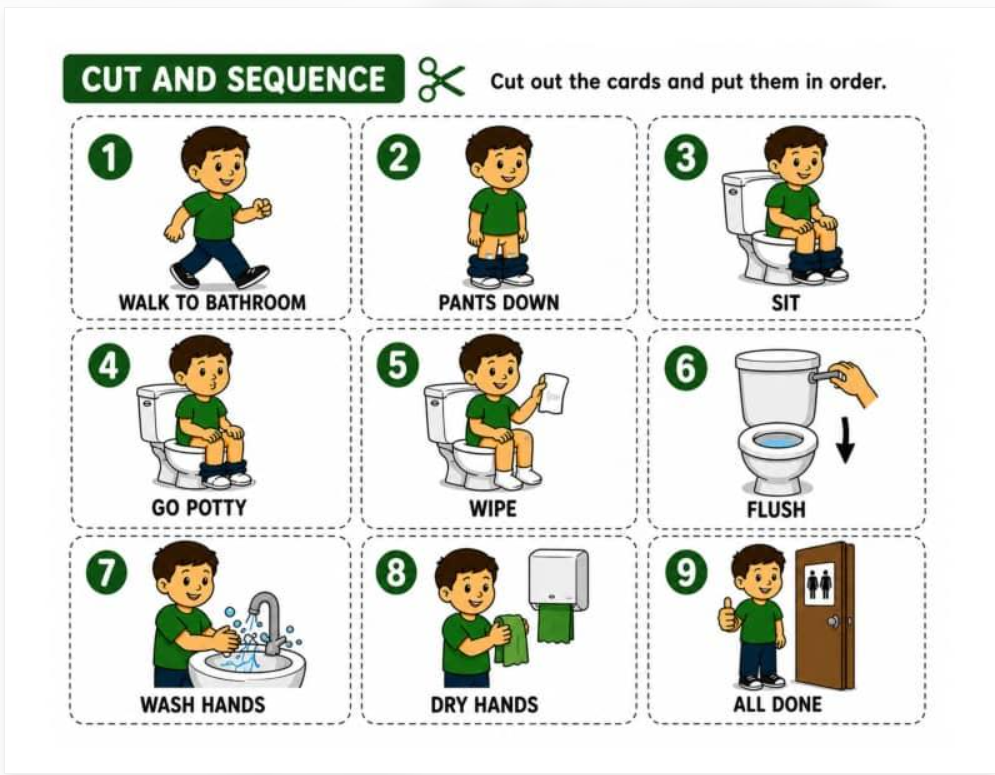
Instead of expecting a child to complete the entire toilet routine immediately, break it into smaller steps.

A basic toilet routine can include:

  1. Recognize or communicate the need to use the toilet.

  2. Walk to the bathroom.

  3. Pull down clothing.

  4. Sit comfortably on the toilet.

  5. Urinate or pass stool.

  6. Clean themselves with appropriate assistance.

  7. Flush the toilet.

  8. Pull clothing back up.

  9. Wash and dry their hands.

Your child may already manage some steps independently and need help with others.

Focus on teaching the next achievable step rather than rushing through the entire routine.
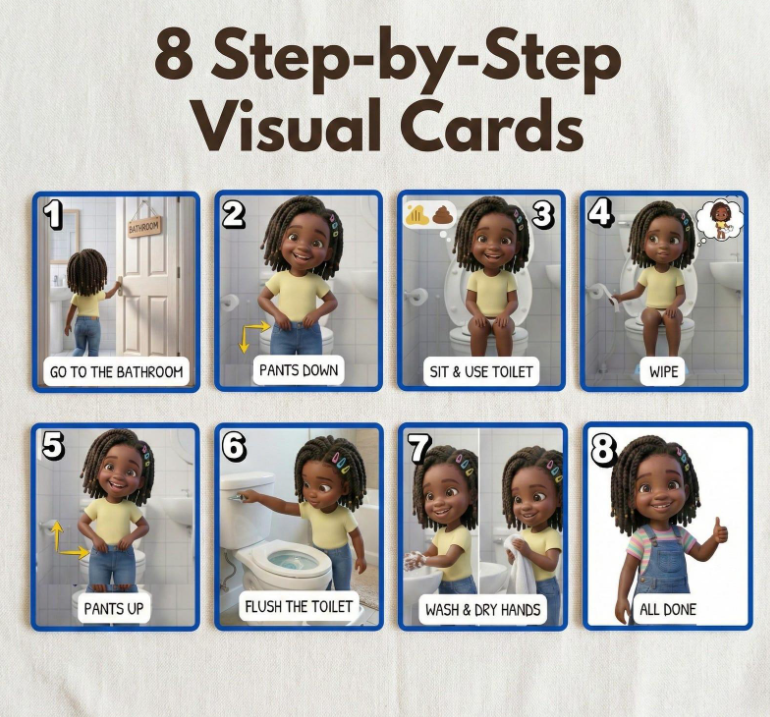
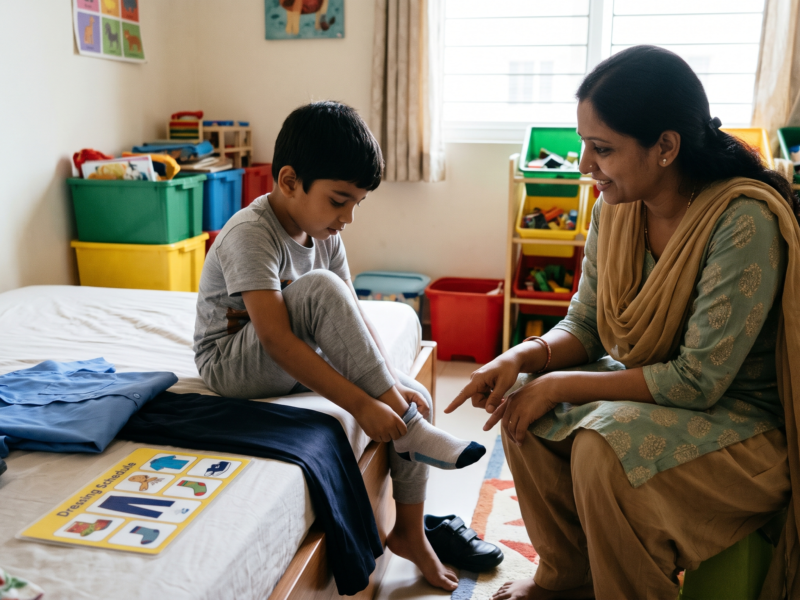
toilet visual schedule

Establish a predictable routine

Offer toilet opportunities at consistent times, such as after waking up, after meals and before bedtime.

Observe your child’s natural toileting patterns rather than forcing an arbitrary schedule.

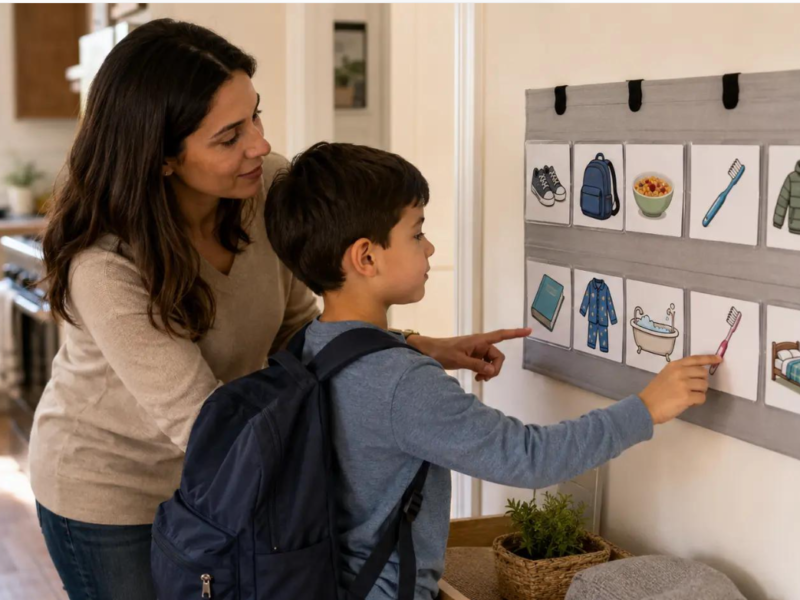
Use visual communication

Some children respond better to pictures than spoken instructions.

Introduce a simple toilet picture card that your child can point to whenever they need to use the bathroom.

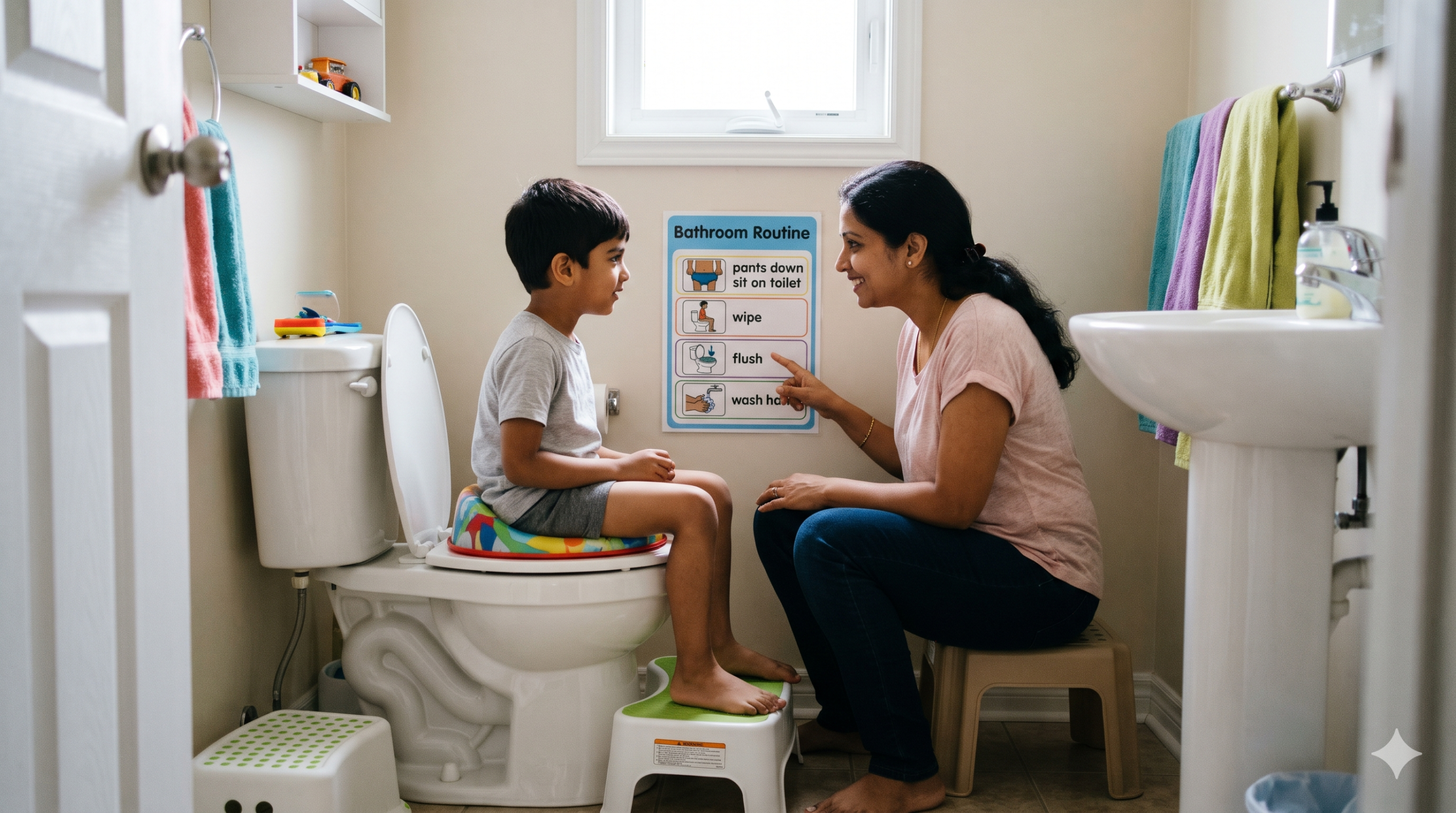
Make the bathroom comfortable

Consider your child’s sensory preferences.

  • Use a comfortable toilet seat.

  • Provide a stable footrest.

  • Adjust harsh lighting if needed.

  • Reduce unnecessary noise.

  • Allow the child to become familiar with the bathroom gradually.

A footrest can also help provide a more stable sitting position, particularly during bowel movements.

Encourage communication

Teach a simple way to communicate toilet needs.

This could be:

  • Saying “toilet”.

  • Showing a toilet picture.

  • Using a gesture.

  • Selecting a toilet symbol on an AAC device.

Do not make spoken language a requirement for accessing the toilet.

Use positive encouragement

Acknowledge participation and progress.

For example, praise the child for entering the bathroom, sitting comfortably or communicating their needs.

Avoid punishment, shame or scolding for accidents.

Toilet refusal can happen for different reasons.

The child may be frightened, uncomfortable, constipated or sensitive to the bathroom environment.

Do not force the child to sit.

Instead, gradually introduce the bathroom experience:

  • First, allow the child to enter the bathroom comfortably.

  • Later, practise standing near the toilet.

  • Introduce sitting with clothes on if appropriate.

  • Gradually practise sitting on the toilet.

  • Allow the child to become familiar with the routine.

If the child experiences pain, persistent distress or severe constipation, seek medical advice rather than continuing to push toilet training.

Learning to use the toilet at home does not automatically mean a child will be comfortable using toilets outside.

Public toilets may have unfamiliar smells, hand dryers, automatic flush systems, crowded spaces and different toilet seats.

Parents can gradually introduce community toileting skills.

Start by:

  • Visiting a quiet, familiar public toilet with your child.

  • Explaining the steps using pictures.

  • Preparing the child for unfamiliar sounds.

  • Carrying familiar supplies when useful.

  • Practising handwashing after toilet use.

  • Gradually introducing different environments.

Never assume that a child who uses the toilet independently at home can safely manage a public bathroom alone.
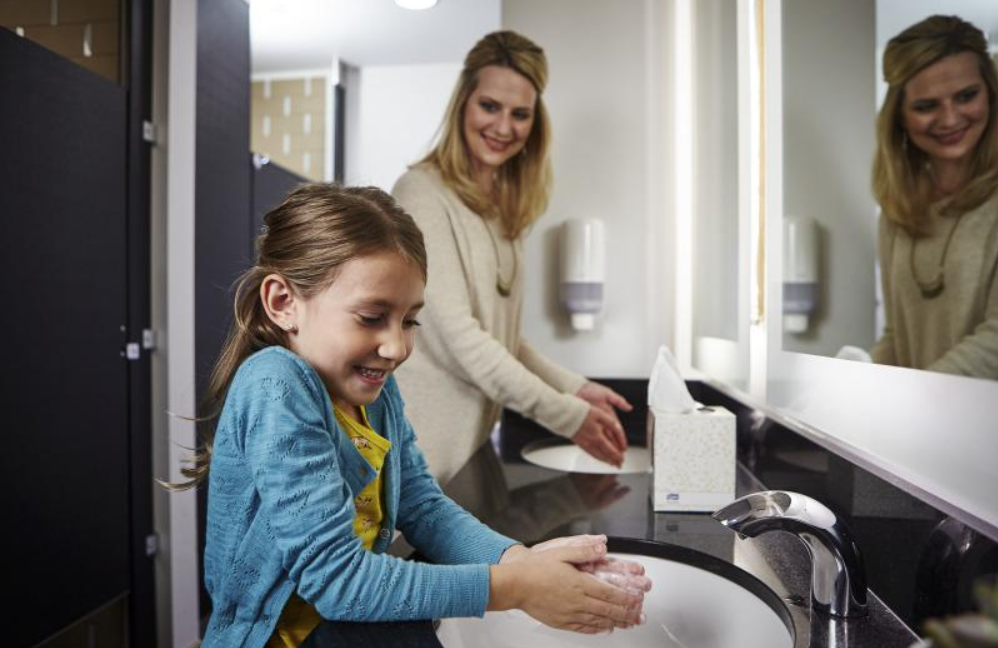
Public toilet independence

Occupational therapists can assess the sensory, motor, communication and routine-related difficulties that may affect toileting.

Depending on the child’s needs, therapy may focus on:

  • Sitting posture and body positioning.

  • Managing clothing, buttons and zippers.

  • Understanding the sequence of toileting activities.

  • Using visual schedules.

  • Sensory adaptations for bathroom environments.

  • Handwashing and personal hygiene.

  • Practising daily routines with gradually reduced assistance.

Toileting may also require collaboration with pediatricians, gastroenterologists or other healthcare professionals, particularly when constipation, pain or bladder problems are involved.

Parent participation is essential because toileting practice happens mainly during everyday routines, not just during therapy sessions.

Every child has different support needs.

For one child, independence may mean communicating when they need the toilet. For another, it may mean completing the entire routine without reminders.

Consider the following example:

Toileting skillCurrent support
Communicates toilet needsUses a picture card
Goes to the bathroomIndependently
Pulls clothing downNeeds some help
Uses the toiletIndependently
WipesNeeds assistance
FlushesIndependently
Washes handsFollows visual instructions

This is meaningful progress, even though the child still needs help with certain steps.

The aim is to identify the next achievable goal and build on existing abilities.

Toilet training can take time, and progress may not always be consistent.

Some children learn quickly, while others need extended teaching, environmental adaptations and ongoing support.

An accident does not mean failure. Needing assistance does not mean your child cannot learn. And using a visual schedule or communication card does not make a child less independent.

The real goal is to help your child communicate their needs, participate in toileting routines and develop the greatest possible independence with dignity and appropriate support.

At Sunshine Kids, we believe that every small step towards everyday independence matters.

With individualized occupational therapy, parent guidance and regular practice, children can work towards meaningful toileting skills that improve their participation at home, school and in the community.

Frequently Asked Questions?

1. At what age should an autistic child be toilet trained?

There is no single correct age. Readiness, medical needs, communication, sensory preferences and developmental abilities should guide the approach.

Public bathrooms may have unfamiliar sounds, smells, lighting and layouts. Gradual exposure and visual preparation may help.

Not necessarily. Toilet schedules should be based on the child’s natural patterns, needs and tolerance. Avoid rigid schedules that cause distress.

Yes. Visual schedules can make the sequence easier to understand and remember. They can be especially useful for children who benefit from visual communication.

Look for patterns and consider whether the child recognizes body signals, communicates their needs or has medical difficulties. Discuss persistent accidents with a healthcare professional.

Occupational therapy can support sensory comfort, motor skills, clothing management, routines and other functional aspects of toileting. Some children also need medical or specialist support.

References and Further Reading

  1. Kroeger, K. A., & Sorensen-Burnworth, R. (2009). Toilet Training Individuals With Autism and Other Developmental Disabilities: A Critical Review. Research in Autism Spectrum Disorders. https://doi.org/10.1016/j.rasd.2008.09.005

  2. National Autistic Society. Toileting and Autistic Children. https://www.autism.org.uk/learn/knowledge-hub/professional-practice/toileting

  3. American Academy of Pediatrics. Autism Spectrum Disorder: Toileting and Daily Living Skills Resources. https://www.healthychildren.org/

  4. American Occupational Therapy Association. Occupational Therapy Practice Guidelines for Autistic People Across the Lifespan. https://doi.org/10.5014/ajot.2024.078301

This article is for educational purposes and does not replace individualized medical or therapeutic assessment.