How to Prepare an Autistic Child for Adulthood: Building Independence Step by Step
“Who will take care of my child when I am no longer around?”
This is a thought that many parents of autistic children carry quietly.
As children grow older, parents begin wondering:
- Will my child be able to look after themselves?
- Will they find meaningful work?
- Can they manage money?
- Will they know how to ask for help?
- Who will support them when I am older?
- Will they have a safe, happy and meaningful adult life?
These are important questions, and families deserve practical guidance rather than unrealistic promises.
Preparing for adulthood does not mean expecting every autistic child to live completely independently. It means developing useful skills, building reliable support systems and respecting the young person’s choices.
The best time to begin is not necessarily when your child turns 18. Many foundations for adult life can be developed through everyday activities during childhood.
Let’s understand where to start.
1. What Does Independence Mean for an Autistic Person?
Independence looks different for different people.
One autistic adult may live alone, work and manage personal finances.
Another may live with family and need assistance with shopping, appointments or household activities.
Someone else may require ongoing daily care while still making meaningful choices about their activities, relationships and preferences.
The goal is not to make everyone live the same kind of life.
The goal is to help each person develop as much choice, participation, comfort and practical independence as possible.
This is sometimes called supported independence.
It recognises that needing assistance does not take away a person’s dignity or right to participate in decisions.
2. Begin With Everyday Self-Care Skills
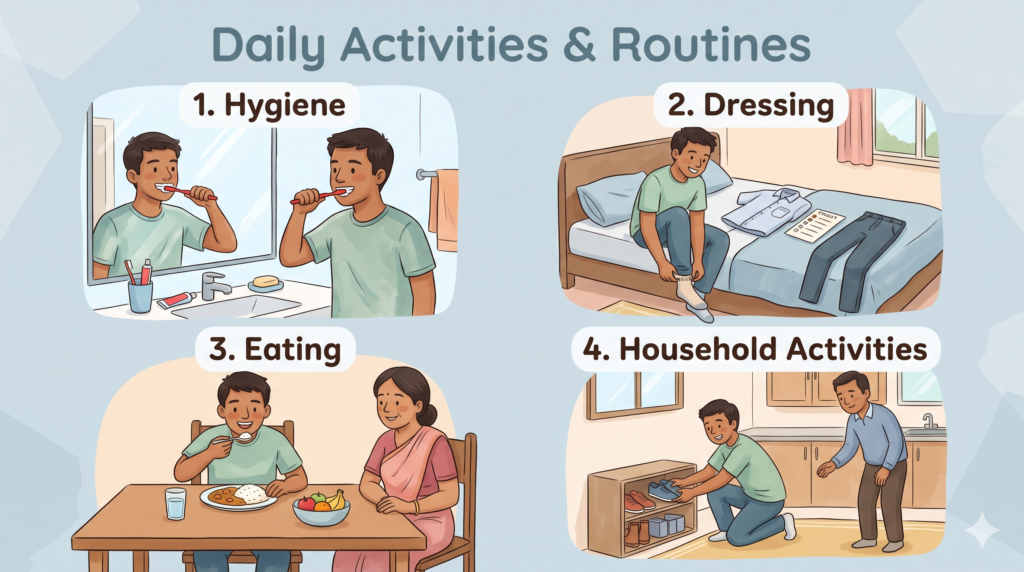
Before worrying about future employment or independent housing, consider the skills your child uses every day.
These include:
- Toileting and personal hygiene.
- Bathing and brushing teeth.
- Dressing and choosing clothes.
- Eating and drinking.
- Managing personal belongings.
- Following familiar daily routines.
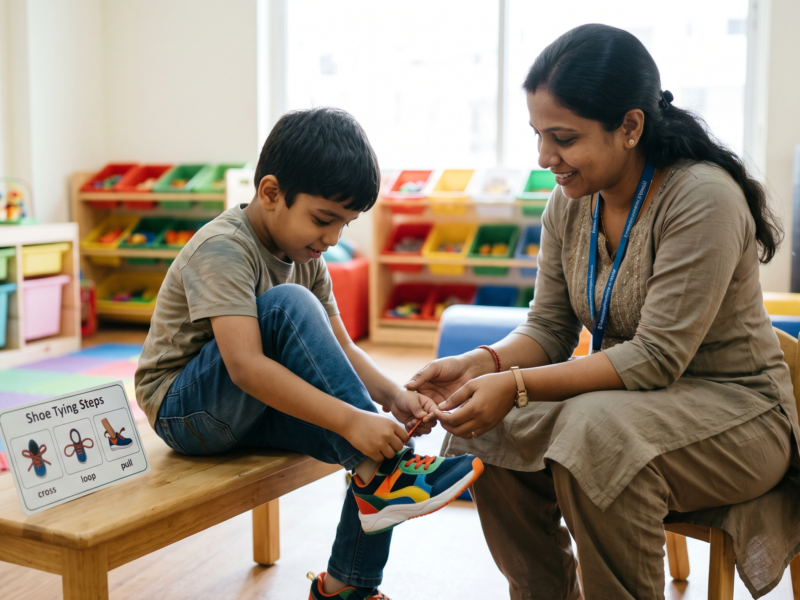
For example, if your child needs complete assistance with dressing, the first goal might be learning to put their arms through a T-shirt.
Later, they may learn to complete more steps.
For some children, using a visual schedule or adapted clothing will remain part of the routine.
That is perfectly acceptable.
A child does not need to complete every activity without assistance for the skill to have value.
3. Teach Functional Communication and Self-Advocacy
One of the most important skills for adulthood is communicating personal needs.
Your child should have an accessible way to express:
- I am hungry.
- I am in pain.
- I need help.
- I don’t understand.
- I want a break.
- I don’t like this.
- I want to choose something else.
Communication may involve spoken words, gestures, signs, pictures or an AAC device.
As children grow, also teach them to communicate preferences and boundaries.
For example:
“I don’t want to do that.”
“Please stop.”
“I need some space.”
These are important skills for personal safety, relationships and self-determination.
Parents can support them by giving children real opportunities to make everyday choices.
4. Build Practical Skills for Home and Community Life
Adult life involves more than personal care.
It may also include:
- Preparing simple meals.
- Keeping belongings organised.
- Buying groceries.
- Understanding basic money transactions.
- Using a phone to contact trusted people.
- Recognising familiar locations.
- Participating in community activities.
- Managing simple household responsibilities.
You can begin with manageable activities at home.
For example:
Childhood: Put toys and belongings in their designated places.
Later: Organise school materials and prepare a simple snack.
Adolescence: Participate in shopping, household tasks and money management.
Adulthood: Continue developing relevant skills and using adaptations or support where necessary.
These are examples, not fixed age-based expectations.
The right sequence depends on the individual’s abilities, interests and priorities.

5. Prepare for Education, Employment and Meaningful Activities
Parents often ask:
“Will my child be able to earn money?”
There is no single answer.
Some autistic people pursue higher education and professional careers.
Others benefit from vocational education, supported employment, workplace accommodations or individually tailored activities.
Begin by understanding your child’s strengths.
They may enjoy:
- Computers or technology.
- Art and design.
- Music.
- Cooking.
- Organising objects.
- Sports.
- Working with animals.
- Practical or repetitive tasks.
- Academic subjects.
These interests may help guide future learning opportunities.
However, a childhood interest does not automatically predict a future occupation.
As the child approaches adolescence, families can explore practical work-related abilities such as following routines, completing tasks, communicating needs, managing time and understanding workplace safety.
Meaningful adult life is not defined only by paid employment. Social relationships, hobbies, recreation and community participation also matter.

6. Teach Safety and Decision-Making Skills
Safety becomes particularly important as children gain more freedom.
Useful skills include:
- Recognising dangerous situations.
- Following road-safety routines.
- Knowing how to contact a trusted person.
- Asking for help in unfamiliar places.
- Protecting personal information.
- Understanding consent and personal boundaries.
- Recognising suspicious online messages or financial requests.
For example, a teenager learning to use a smartphone may need guidance about privacy, unknown contacts, passwords and digital payments.
Safety education should be practical and repeated in appropriate settings.
Adult supervision and safeguards must continue wherever the person cannot reliably manage the relevant risks.
7. Start Planning for Adulthood Before the Age of 18
Families do not need to wait until the final year of school to begin planning.
During adolescence, start discussing:
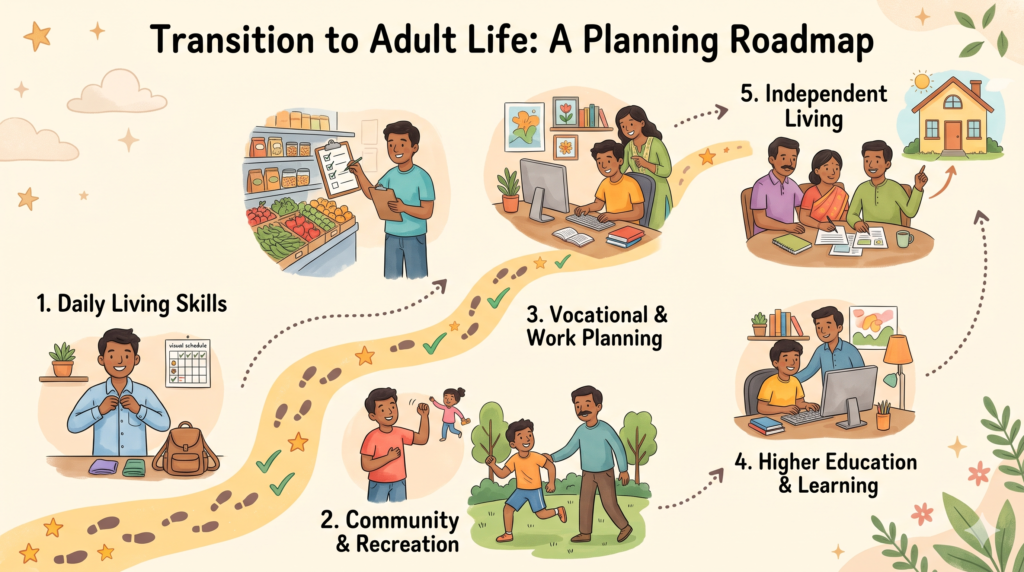
Education: What learning opportunities are suitable?
Work: What interests, strengths and support needs should be considered?
Daily living: Which skills need further teaching or adaptation?
Health: How will healthcare needs be managed in adulthood?
Community: What activities and relationships are important?
Future support: Who can assist when parents are unavailable?
The autistic young person should participate in these discussions in whatever way is accessible to them.
This may involve conversation, pictures, AAC, written choices or supported decision-making.
A useful transition plan focuses on the individual’s wishes and quality of life rather than simply listing deficits.
8. What About Financial Security and Long-Term Care?
For some families, practical skills alone will not address every concern.
Long-term planning may also involve:
- Identifying trusted family members and support networks.
- Keeping medical and educational records organised.
- Understanding disability certificates and available government schemes.
- Exploring appropriate insurance and financial planning.
- Considering future living arrangements.
- Obtaining legal advice about decision-making support, guardianship or estate planning where appropriate.
In India, families can explore the official Unique Disability ID (UDID) system and information provided by the National Trust.
Legal guardianship is not automatically necessary for every autistic adult. Adults have legal rights, and arrangements for decision-making support must take account of the person’s abilities, wishes and applicable law.
Families should consult a qualified Indian legal professional before making legal or financial arrangements.
Planning ahead is not about assuming that something will go wrong. It is about creating a reliable support system for the future.
9. How Can Occupational Therapy and Parent Training Help?
Occupational therapy can contribute to preparing children and adolescents for adulthood by addressing meaningful everyday activities.
Depending on individual needs, this may include:
- Self-care routines.
- Household skills.
- Motor coordination.
- Sensory accommodations.
- Planning and organising activities.
- Community participation.
- Using adaptive equipment or visual supports.
Speech-language therapists, special educators, psychologists, vocational professionals and other specialists may contribute to different aspects of the transition.
Parents also play a valuable role by helping children practise functional skills during everyday routines.
Rather than working on many unrelated activities, families and professionals can identify a few priority goals and review progress regularly.
The most useful goals are those that improve the person’s everyday participation and quality of life.
10. What Can Parents Start Doing Today?
You do not need to make every decision about your child’s adulthood immediately.
Start with five questions:
- What can my child already do?
Recognise their strengths and existing abilities.
- What activities are difficult?
Identify barriers involving motor skills, communication, sensory needs, understanding or the environment.
- What matters most to my child?
Include their interests, preferences and choices.
- Which one skill could we work on next?
Choose a meaningful, manageable daily activity.
- What support will my child need in the future?
Begin building a network of trusted people, appropriate services and practical resources.
Review these questions as your child grows.
The answers will change over time.

Frequently Asked Questions?
1. Can autistic children become independent adults?
Some autistic children grow into adults who manage most aspects of life independently. Others need varying levels of ongoing assistance.
Individual outcomes cannot be reliably predicted from an autism diagnosis alone.
2. When should parents start planning for adulthood?
Daily living skills can be introduced during childhood. More formal transition planning becomes increasingly important during adolescence, well before leaving school.
3. My child cannot speak. Can they still develop independence?
Yes. Non-speaking autistic people can learn daily living skills, express preferences and participate in decisions using accessible communication methods.
The amount of support needed varies individually.
4. Is employment necessary for a successful adult life?
Employment can provide opportunities for independence, social participation and financial security, but it is not the only measure of success.
Personal well-being, relationships, meaningful activities, choice and safety are also important.
5. What happens when parents can no longer provide care?
There is no single solution for every family.
Planning may include other family members, trusted supporters, community services, financial arrangements and appropriate legal structures.
It is wise to explore these options early with qualified professionals and involve the autistic person in decisions as much as possible.
Final Thoughts: Prepare for the Future, One Skill at a Time
Parents cannot predict everything about their child’s future.
But they can help build a foundation for a meaningful adult life.
Every skill matters.
Learning to brush teeth.
Opening a lunchbox.
Asking for help.
Choosing clothes.
Participating in shopping.
Communicating discomfort.
Making decisions.
For some individuals, these skills may eventually support independent living.
For others, they may make daily life easier, safer and more comfortable with ongoing assistance.
The question is not only, “Will my child be able to live without me?”
A more helpful question is:
“What skills, relationships and support systems can we build today so that my child has the best possible quality of life in the future?”
At Sunshine Kids, we believe that every child’s progress deserves to be understood through their individual abilities, meaningful goals and everyday participation.
Because preparing for adulthood is not about reaching one fixed definition of independence. It is about helping each person build a life with dignity, choice, belonging and appropriate support.