
What Should I Do About My Autistic Child’s Schooling? A Complete Guide for Parents

Parent discussing schooling options for an autistic child with a teacher.

“Should I send my child to a mainstream school or a special school?”

“Will my child be able to study with other children?”

“Is my child actually learning at school?”

“Am I making the right decision about my child’s future?”

For many parents of autistic children, schooling brings more questions than answers. While some parents worry about admission, others struggle with classroom behaviour, academic progress, school refusal, friendships or finding the right educational support.

Every child has different strengths, abilities, interests and challenges. What works for one autistic child may not work for another.

The goal of schooling should not simply be to make your child attend school or complete a syllabus. It should help your child learn, communicate, participate, develop independence and feel safe and accepted.

What does successful schooling really mean?

Many parents measure their child’s school progress through marks, handwriting, homework and examination results. However, successful schooling involves much more than academics.
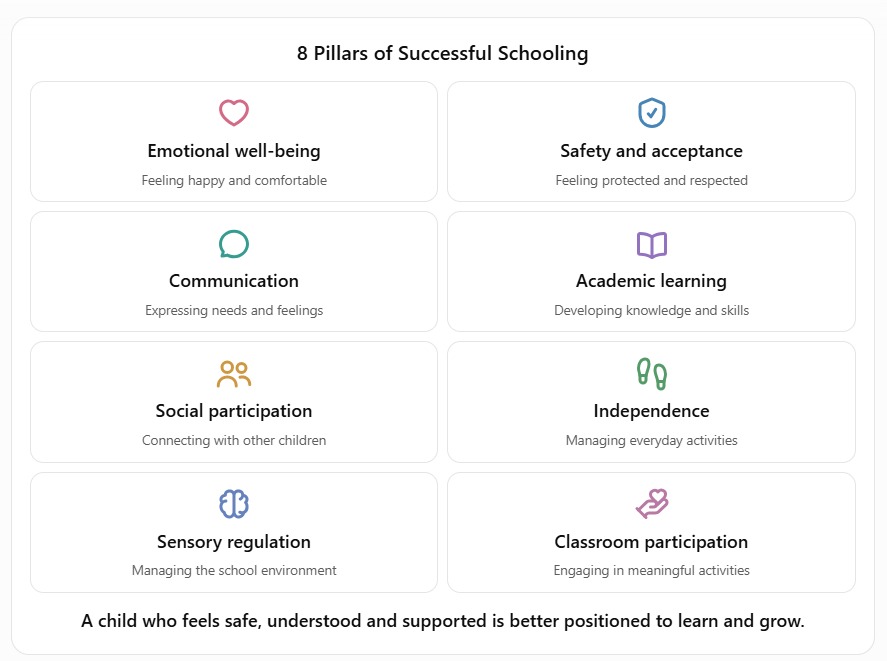
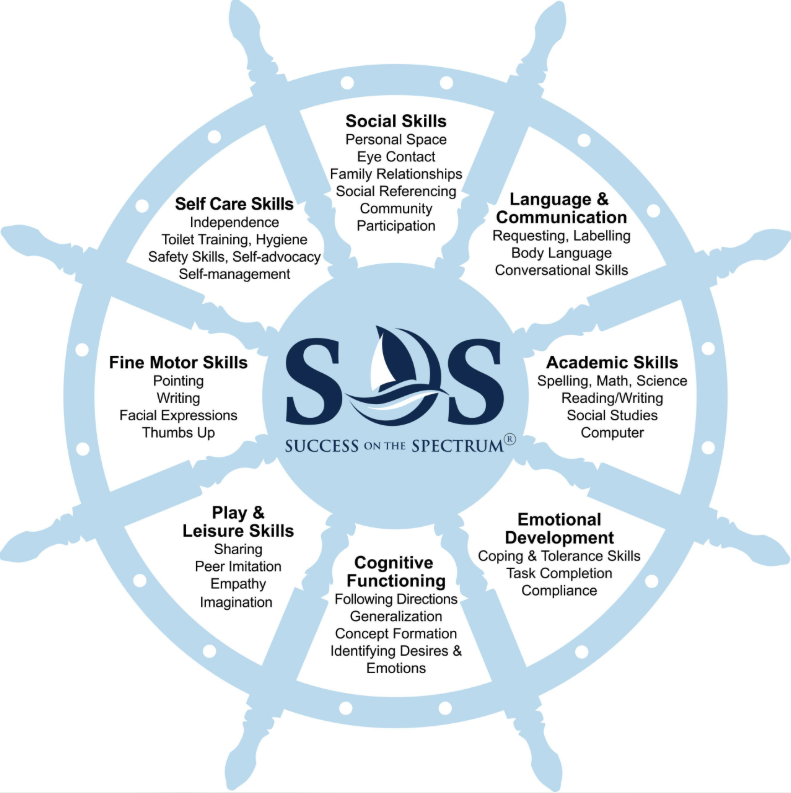
8 pillars of successful schooling

success on spectrum

As a parent, ask yourself: Is my child only attending school, or is my child experiencing meaningful learning and development?

1. Mainstream school or special school: Which is better for my child?

There is no single schooling option that is best for every autistic child.

A mainstream school may provide opportunities for peer interaction, academic learning and participation in everyday school activities. A special school may offer smaller groups, individualised teaching and more specialised support.

Some children may benefit from inclusive mainstream education with accommodations, while others may need a more specialised learning environment.

The decision should consider your child’s communication, learning abilities, emotional well-being, sensory needs, independence and the support available at the school.

Read more: Mainstream School or Special School: Which Is Better for My Autistic Child?
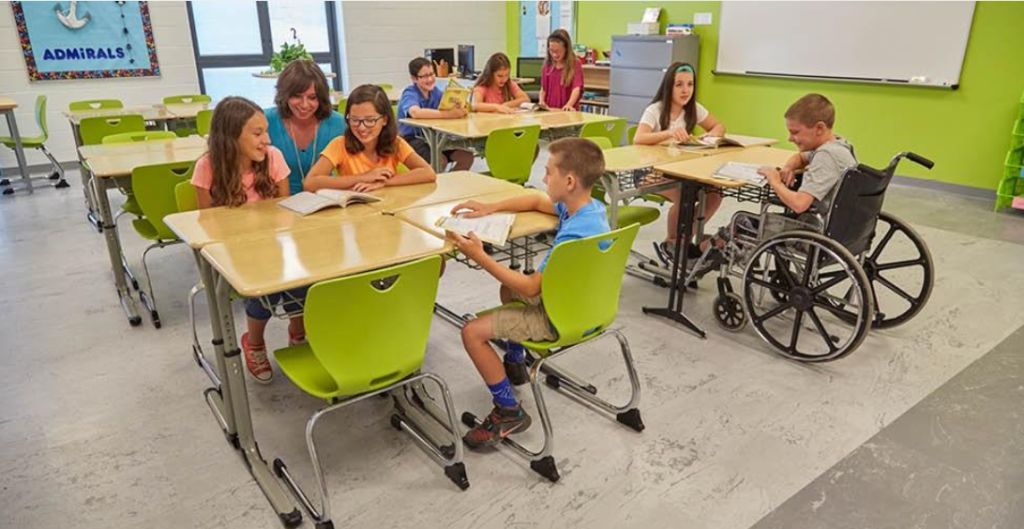
main stream vs special school

A child does not need to perform exactly like other students to benefit from mainstream education.

Some children may need additional time, adapted worksheets, visual instructions, communication support, movement breaks or individual assistance.

Before deciding whether mainstream schooling is suitable, observe whether your child is learning, participating, feeling comfortable and making meaningful progress with appropriate support.

The question is not only whether your child can adjust to the school, but also whether the school can adjust to your child’s needs.

Read more: Can My Autistic Child Continue in Mainstream School?

A school’s reputation, infrastructure and academic results are important, but they are not the only factors to consider.

Look for teachers who are willing to understand your child, flexible teaching methods, a supportive environment and open communication between parents and school staff.

If your child experiences persistent anxiety, bullying, repeated exclusion, distress or limited learning despite appropriate support, it may be necessary to reconsider the current schooling arrangement.

Changing schools should be a thoughtful decision based on your child’s needs rather than comparison with other children.

Read more: How to Choose the Right School for an Autistic Child | Should I Change My Autistic Child’s School?

School readiness is not just about knowing alphabets, numbers, colours or shapes.

Children may benefit from developing skills such as:

  • Communicating basic needs and asking for help.

  • Participating in individual and group activities.

  • Managing personal belongings.

  • Developing toileting and eating independence.

  • Managing transitions between activities.

  • Expressing discomfort and emotions.

  • Following accessible classroom instructions.

These skills can make school participation easier, but they are not compulsory prerequisites for receiving an education. Children can continue developing them while attending school with appropriate support.

Read more: Is My Autistic Child Ready for School? Important School Readiness Skills.

Child practicing independence and school readiness skills

A shadow teacher or classroom support assistant may help a child understand instructions, communicate needs, participate in activities, manage transitions and access learning opportunities.

However, not every autistic child requires one-to-one assistance.

The type and amount of support should depend on the child’s individual requirements.

The purpose of additional support should be to encourage meaningful participation and independence, not to create unnecessary dependence on another adult.

Read more: Does My Autistic Child Need a Shadow Teacher?

shadow teacher support

Teachers may understand autism in general but may not know how your particular child learns and communicates.

Share information about your child’s strengths, interests, communication methods, sensory sensitivities, difficulties, emotional responses and successful learning strategies.

Also explain what helps your child feel comfortable when overwhelmed.

Regular communication between parents, teachers and therapists can help everyone work towards consistent and meaningful goals.

Read more: What Should I Tell My Autistic Child’s School Teacher?

A child may perform an activity independently during therapy but struggle with the same activity at school.

Therapy often involves individual attention, structured activities, familiar instructions and fewer distractions. School involves group instructions, different people, noise, transitions and multiple expectations.

Applying a learned skill in different situations is known as generalisation.

Parents, teachers and therapists should work together to help children use their existing abilities across different environments.

Read more: Why Does My Child Learn at Therapy but Not at School?

Sometimes, a small change in the classroom environment can make a meaningful difference in a child’s learning experience.

Helpful accommodations may include:

  • Visual schedules and simplified instructions.

  • Additional time to understand and complete tasks.

  • Movement breaks and access to quiet spaces.

  • Adapted learning materials and writing alternatives.

  • Communication cards or AAC devices.

  • An Individualised Education Plan (IEP).

The support should be selected according to the child’s individual needs and reviewed regularly. Research highlights the importance of adapting learning environments as well as developing children’s individual skills.

Read more: What Is an Individualised Education Plan? | Classroom Accommodations for Autistic Children.

When a child cries, refuses to wear a school uniform or becomes distressed before school, parents may assume that the child is being stubborn.

However, school refusal can be a sign that something is difficult or overwhelming for the child.

Possible reasons include anxiety, bullying, sensory overload, academic pressure, communication difficulties, separation anxiety or physical discomfort.

Instead of immediately forcing the child to attend school, try to understand what is causing the distress and work with the school and relevant professionals to address it.

Read more: Why Does My Autistic Child Refuse to Go to School?

Does your child frequently leave their seat, cry, shout, avoid writing, struggle to concentrate or refuse classroom activities?

Behaviour can provide valuable information about what a child is experiencing.

For example, a child who refuses writing activities may have handwriting difficulties. A child who repeatedly leaves their seat may need movement breaks. A child who covers their ears may be experiencing sensory discomfort.

Understanding the reason behind the behaviour is an important first step towards providing effective support.

Read more: How Can I Improve My Autistic Child’s Classroom Behaviour? | Why Can’t My Child Sit, Concentrate or Follow Instructions in Class?

School bells, crowded classrooms, assemblies, playground noise and unexpected changes can be overwhelming for some autistic children.

Some children manage their stress throughout the school day but become exhausted or distressed after returning home.

Understanding your child’s sensory and emotional needs can help teachers and parents create a more comfortable learning environment.

Read more: Why Does My Autistic Child Get Overwhelmed at School? | Why Is My Child Fine at School but Has Meltdowns at Home?

Friendships, belonging and acceptance are important parts of school life.

Some autistic children may find it difficult to initiate conversations, join group activities, understand social situations or communicate when someone treats them unfairly.

Parents and teachers can help by creating supportive opportunities for interaction, teaching children how to ask for help and ensuring that bullying is addressed promptly.

The responsibility for preventing bullying belongs to the school and the adults responsible for children’s safety, not to the autistic child alone.

Read more: How Can I Help My Autistic Child Make Friends? | What If Other Children Tease or Bully My Child?


friendship and social environment

Many parents ask their child, “What did you do at school today?” but receive very little information.

Regular teacher feedback, communication diaries, visual questions and observation of changes in behaviour can help parents understand their child’s school experiences.

It is also important to develop the child’s ability to communicate discomfort, request assistance and express personal experiences using speech or alternative communication methods.

Read more: How Do I Know What Is Happening With My Child at School? | How Can I Teach My Child to Ask for Help?

Both academic and functional skills are important.

A child may be excellent at reading, mathematics or technology but may struggle with managing belongings, asking for help or completing everyday activities independently.

Education should build on the child’s strengths while developing practical skills that support everyday life and future independence.

Functional learning should complement academic opportunities rather than unnecessarily replace them.

Read more: Should I Focus on Academics or Functional Skills? | My Child Can Read but Does Not Like Writing.

As children grow older, educational needs and expectations change.

Parents may need to explore secondary schooling, examination accommodations, flexible educational pathways, vocational training and preparation for adulthood.

It is also important for Indian parents to understand the educational rights and available support for children with disabilities.

Future planning should consider the child’s interests, strengths, preferences and long-term aspirations.

Read more: Schooling Rights and Educational Options for Autistic Children in India | Secondary School and Future Education.

How can Sunshine Kids help your child with schooling?

At Sunshine Kids Occupational & Speech Therapy Center, we understand that successful schooling involves much more than academic learning.

Our individualised therapy and educational support can help children develop:

  • School readiness and classroom participation.

  • Functional communication and language development.

  • Sensory and emotional regulation.

  • Fine motor and handwriting skills.

  • Attention, cognitive and learning skills.

  • Social interaction and self-confidence.

  • Daily living skills and independence.

We encourage parents, teachers and therapists to work together to understand each child’s individual needs and develop meaningful goals.

Final thoughts for parents

Your child’s educational journey may look different from that of other children, and their needs may change over time.

Instead of comparing your child with classmates, focus on individual progress, emotional well-being, learning opportunities and growing independence.

Ask yourself not only:

“Is my child ready for school?”

But also:

“Is my child’s school ready to understand, accept and support my child?”

Every child deserves an education where they feel safe, valued, included and encouraged to reach their potential.

Need guidance regarding your child’s school readiness, communication, classroom participation or independence? Connect with Sunshine Kids Occupational & Speech Therapy Center to discuss your child’s individual needs.