Everyday Independence at Home and School: Life Skills Every Autistic Child Can Practise
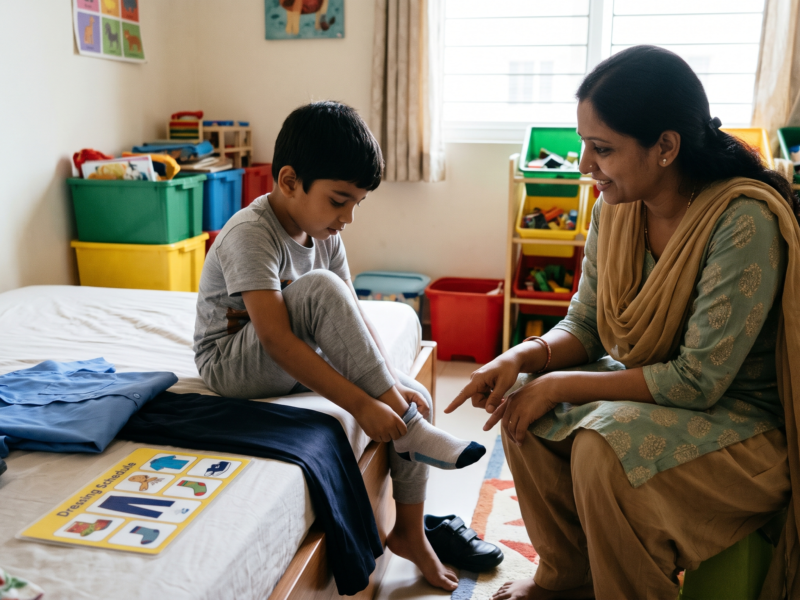
Parents often think about independence in terms of major milestones: dressing, bathing, eating or using the toilet. But many important life skills are built through small everyday activities.
Putting toys away, carrying a school bag, opening a lunch box, asking for help or following a morning routine may seem simple. However, these activities help children participate more actively in family, school and community life.
For autistic children, learning these skills may require clear instructions, repetition, visual supports and individual adaptations. The aim is not to make every child do everything alone. It is to help each child develop meaningful skills and participate as independently as possible
1. Everyday skills children can practice at home
Home is a natural place to learn because children can practise useful activities as part of their regular routine.
Here are some examples:
Personal organisation
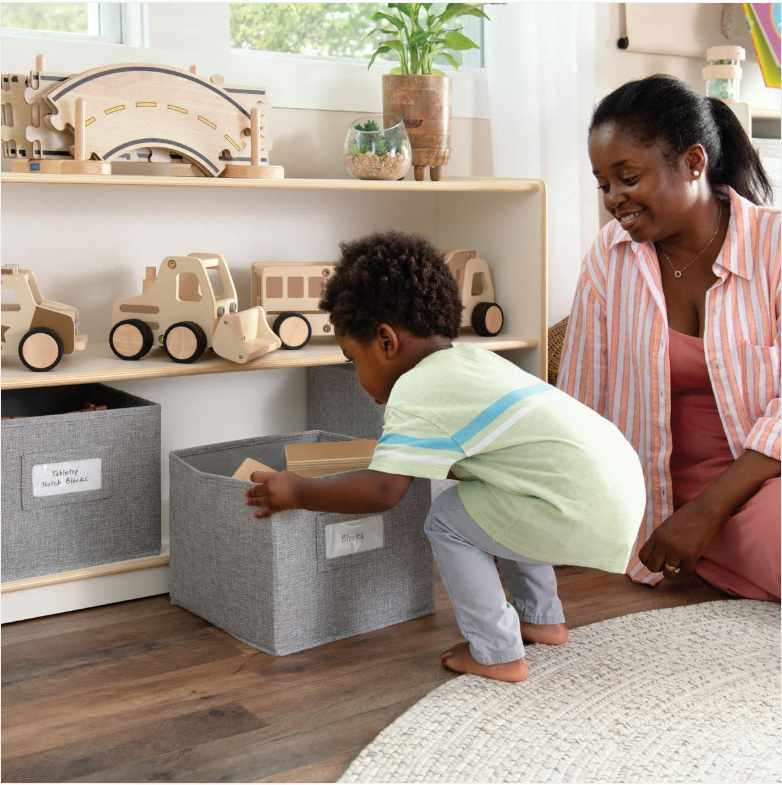
Putting toys and books in their usual places.
Keeping shoes in a designated area.
Placing dirty clothes in a laundry basket.
Keeping personal belongings together.
Mealtime responsibilities
Carrying an empty plate or cup to the kitchen.
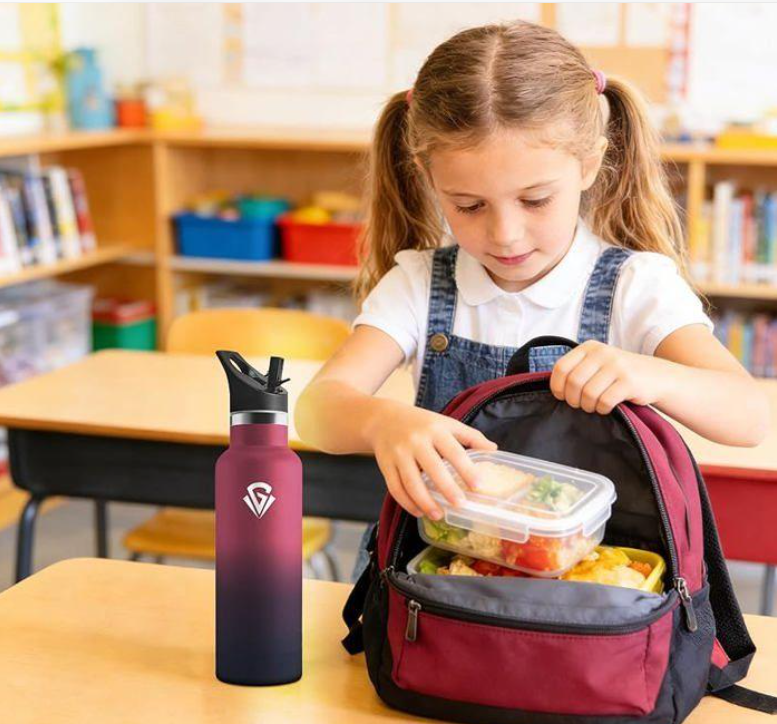
Opening a suitable lunch box.
Helping set the table.
Putting used utensils in a designated place.
Simple household activities
Watering plants with a small watering can.
Putting napkins on the table.
Matching clean socks.
Wiping a small, safe surface.
Helping put away groceries that are safe and appropriate for the child to handle.
Personal routines
Collecting clothes for the next day.
Following a bedtime routine.
Packing a few personal items before going out.
Washing hands before meals.
Start with activities that are safe, useful and achievable for your child. Household responsibilities should be appropriate to their abilities and should not involve hazardous items, hot surfaces or chemicals.
2. Everyday skills children can practise at school
School offers opportunities to develop independence outside the home.
Depending on the child’s needs and school environment, useful skills may include:
Carrying and keeping track of a school bag.
Taking out books and stationery.
Keeping a water bottle in the correct place.
Opening a lunch box or snack container.
Following a classroom routine.
Putting away learning materials after an activity.
Waiting for a turn with appropriate support.
Asking a teacher for help.
Communicating when they need a break or feel uncomfortable.
A child does not have to complete every activity independently to benefit from practising it. A picture reminder, adapted container, communication card or adult assistance may make participation possible.
Parents and teachers should agree on a few meaningful skills to practise consistently rather than introducing too many new expectations at once.
3. Teach skills by breaking them into small steps
Many everyday activities involve several actions in a particular order.
For example, packing a school bag may involve:
Check the timetable or packing list.
Collect the required books.
Put the books in the bag.
Add the pencil box.
Put in the water bottle.
Check the lunch box.
Close the bag.
A child who struggles with the complete activity may still be able to perform several individual steps.
Observe what your child can already do. Then teach the missing steps one at a time.
This approach is often called task analysis: breaking a larger activity into smaller, teachable actions.
4. Use visual supports to make routines easier
Some children find spoken instructions difficult to remember, especially when several instructions are given together.
Visual supports can make the next action clearer.
Examples include:
Photographs showing where belongings should be kept.
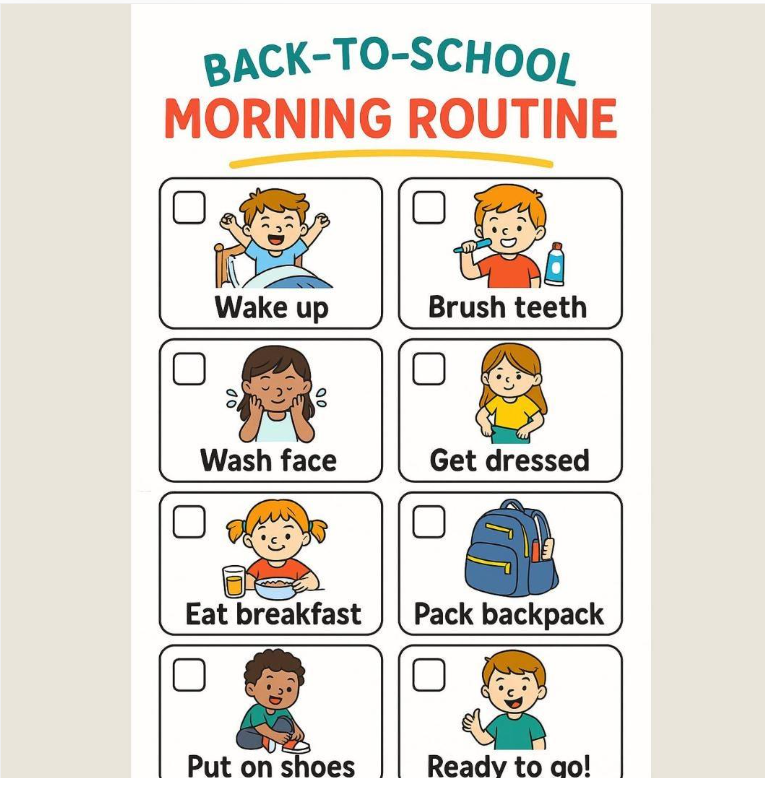
A morning routine chart.
A picture checklist for packing a school bag.
A first-then board.
A written list for an older child who reads comfortably.
A timer or calendar to help prepare for changes.
For example, a simple after-school routine could show:
Keep shoes in their place.
Put the school bag away.
Wash hands.
Change clothes.
Have a snack.
Keep the lunch box in the kitchen.
Choose pictures, symbols, written words or objects according to what your child understands. Visual supports are helpful tools, but they should be individualised rather than automatically used for every child.
5. Teach children to communicate their needs
Independence is not only about completing physical activities. A child also needs ways to communicate what they want, what they do not want and when they need support.
Practise useful messages such as:
“Help me.”
“I need a break.”
“I am finished.”
“I don’t understand.”
“Where is my bag?”
“I need water.”
“I don’t like this.”
A child may communicate through speech, gestures, pictures, signs or an AAC device. All effective communication methods should be respected.
You can practise these messages during everyday activities. For example, when a lunch box is difficult to open, give your child an opportunity to ask for help rather than immediately doing it for them.
6. How can parents encourage independence without pressure?
Parents often help quickly because they want to save time or prevent frustration. This is understandable, but children also need opportunities to try.
Try these strategies:
Give enough time: Avoid rushing every activity. Practise new skills when the family is not in a hurry.
Offer meaningful choices: Let your child choose between two suitable snacks, clothes or activities.
Use short instructions: Give one clear instruction at a time and allow processing time.
Wait before helping: Give your child an opportunity to attempt the activity.
Offer the right amount of support: Use a picture, gesture, demonstration or assistance when needed.
Appreciate participation: Recognise effort and progress, even if the child completes only part of the task.
Do not remove necessary support just to make a child appear independent. The goal is meaningful participation, not simply reducing adult assistance.
7. Make home and school work together
A skill learned in one environment may not automatically transfer to another.
For example, a child who packs a bag with a parent may need separate practice to organise classroom materials at school.
Parents and teachers can work together by:
Selecting two or three practical goals.
Using similar pictures or instructions where possible.
Agreeing on what support the child needs.
Sharing observations about what is working.
Reviewing progress regularly.
Adjusting expectations when the child’s needs change.
Consistency does not mean every setting must look identical. It means that the child receives understandable and compatible support across environments.
8. How can occupational therapy support everyday independence?
Occupational therapy focuses on helping children participate in meaningful daily activities.
Depending on the child’s individual needs, an occupational therapist may support:
Fine motor skills for handling objects and school materials.
Bilateral coordination and motor planning.
Dressing, hygiene and eating routines.
Organisation and task sequencing.
Sensory-related barriers to participation.
Practical household and classroom activities.
Parent and caregiver strategies for practising skills in daily life.
At Sunshine Kids, daily living goals can be included in an individual child’s therapy plan when relevant. Parents can learn how to practise these skills during ordinary home routines, while teachers may help reinforce appropriate school-based goals.
9. How do you know your child is making progress?
Progress does not always mean completing an activity without help.
Look for changes such as:
| Everyday skill | Progress to notice |
|---|---|
| Keeping belongings | Puts shoes or toys in the correct place |
| School routine | Follows one or more steps with fewer reminders |
| Mealtime | Opens a suitable container |
| Household activity | Helps put away familiar items |
| Communication | Asks for help or indicates a need |
| Organisation | Collects items using a picture list |
| Participation | Attempts an activity instead of waiting for an adult to do everything |
Review these observations regularly. If a task is consistently too difficult or distressing, simplify it or change the support.
Frequently Asked Questions?
1. What daily living skills should I teach my autistic child first?
Start with activities that are useful in your child’s everyday life, such as putting belongings away, washing hands, opening a lunch box or communicating a need. Choose goals based on the child’s current abilities and priorities.
2. Should children learn household chores?
Children can participate in simple, safe household activities suited to their abilities. The purpose is to develop participation and practical skills, not to place adult responsibilities on them.
3. My child can do a task at home but not at school. Why?
Different environments may have different instructions, materials, noise levels and routines. The child may need practice and support in each setting.
4. Do visual schedules work for every autistic child?
No single support works for everyone. Some children respond well to photographs, others to written lists, objects, gestures or spoken instructions. Choose the format your child understands.
5. Can occupational therapy help with school and home independence?
Occupational therapy can help identify barriers to daily participation and develop practical strategies for routines, coordination, organisation and self-care.
A final message for parents
Everyday independence is built through ordinary moments: putting away a toy, carrying a water bottle, opening a lunch box, asking for help or remembering the next step in a routine.
You do not need to teach everything at once. Choose a few meaningful activities, practise them regularly and celebrate progress.
The most important goal is to help your child participate in family, school and everyday life with dignity, confidence and the support they need.
Research references
These sources support the practical strategies in this article:
American Academy of Occupational Therapy (AOTA): Interventions to Support Participation for Autistic Children at Home — discusses family coaching, daily routines and participation in home activities.
aota.orgTEACCH Autism Program: Daily Living Routines — explains breaking everyday activities into smaller steps and using visual sequences.
TEACCH® Autism ProgramRutherford et al. (2020): Visual Supports at Home and in the Community for Individuals With Autism Spectrum Disorders: A Scoping Review — reviews how visual supports are used in home and community settings.
PubMedAmerican Academy of Pediatrics: Identification, Evaluation, and Management of Children With Autism Spectrum Disorder — discusses individualised supports, family involvement, predictable routines and progress monitoring.
American Academy of PediatricsEvidence-Based Interventions in Autism: Review article — discusses task analysis, organisation strategies and daily living skills across home and school.